
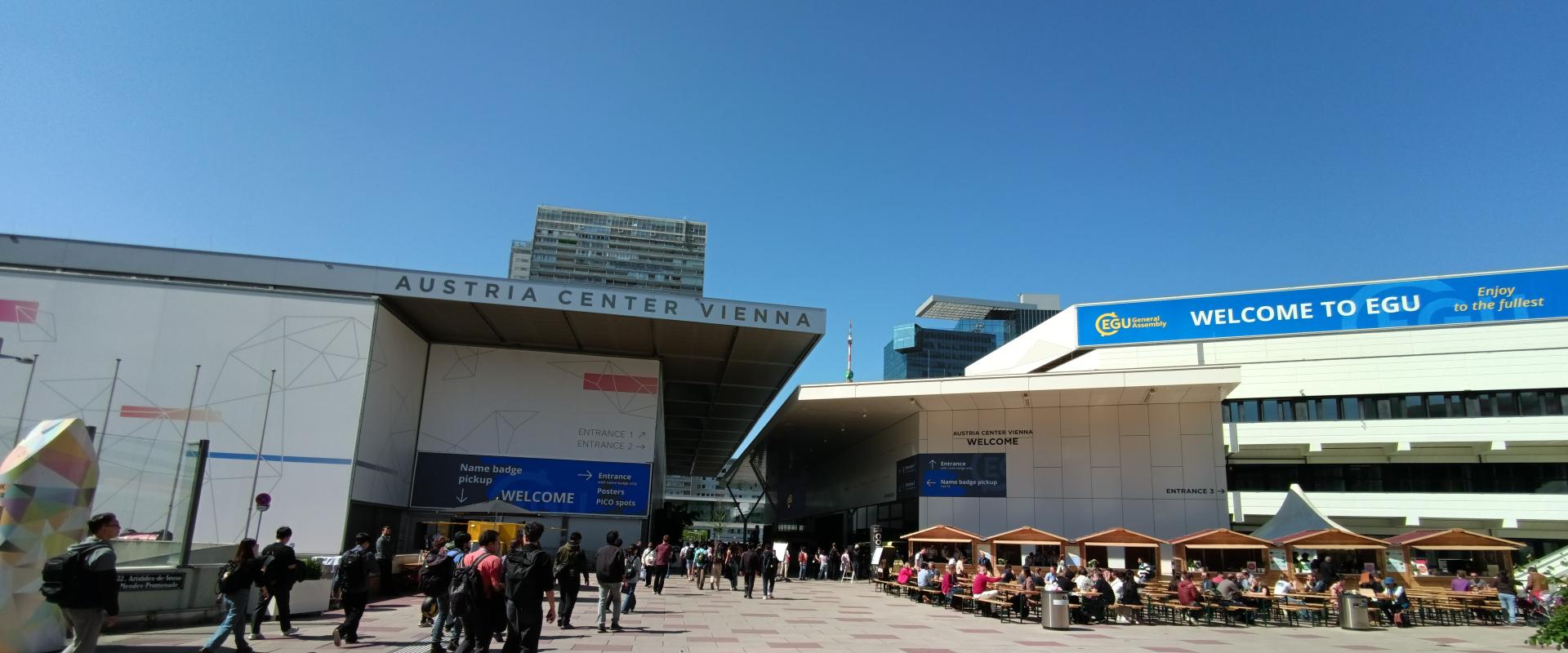
EGU 2025: a major scientific event
The EGU General Assembly is the largest European event in geosciences, bringing together more than 21,000 scientists to discuss current societal and environmental challenges. This year, the Risques Programme (IRiMa) led a key session on innovative approaches to mitigating risks related to aridity, weather extremes and climate change.
A session dedicated to risk and resilience
Integrated within the thematic group “Risk, resilience and adaptation”, this session was chaired by Gilles Grandjean, co-director of the Risques Programme (IRiMa), Mattéo Zampieri (KAUST – University of Padua), and Nicolas Eckert, co-lead of the IRIMONT project focused on mountain risks.
The objective was to explore inter- and transdisciplinary approaches to better detect, quantify and anticipate climatic and environmental risks.
Growing challenges in a context of climate change
Between 1980 and 2022, weather extremes caused estimated economic losses of €650 billion in the European Union. In light of this observation, the session highlighted the need to strengthen collaboration between geosciences, climate sciences, engineering and the social sciences to develop comprehensive mitigation and adaptation strategies.
Building on the approach developed by the Risques Programme (IRiMa), this session of ten presentations showcased inter- and transdisciplinary methodologies for disaster risk reduction, aiming to improve the detection, quantification and anticipation of risks linked to weather extremes and climate change.
Discussions also addressed challenges specific to arid regions, focusing on water–vegetation–climate interactions and their implications for ecosystem and societal resilience. Participants also explored the potential and impacts of water management practices and climate change mitigation strategies such as carbon capture and the expansion of renewable energy in arid regions.
A conference on anticipating technological accidents
Irène Korsakissok, co-lead of the NaTech Risks project, presented a new approach entitled: “Clustering methods for decision-making: application to flood risks and radiological emergencies.” The NaTech Risks project, integrated into the Risques Programme (IRiMa), aims to anticipate and manage technological accidents triggered by natural events in urban and peri-urban territories.
An innovative approach to decision-making in emergency situations
This presentation highlighted the fragility of decision-making processes in emergency situations, as the necessary information (derived from field observations or modelling) may be difficult to access despite the rapidity with which decisions must be taken. While risk assessment relies on well-established methodologies, major challenges remain in accounting for uncertainties within emergency decision-making processes.
A new approach was proposed, based on scenarios combining meta-modelling and clustering, to select different scenarios characterised by their probability of occurrence and associated impact. This approach, illustrated through applications to flood risk and nuclear emergencies, allows uncertainties to be better integrated into decision-making while involving stakeholders in the process. This method will be tested within the NaTech project on marine flooding risk in the Gironde estuary combined with nuclear and industrial accidents.
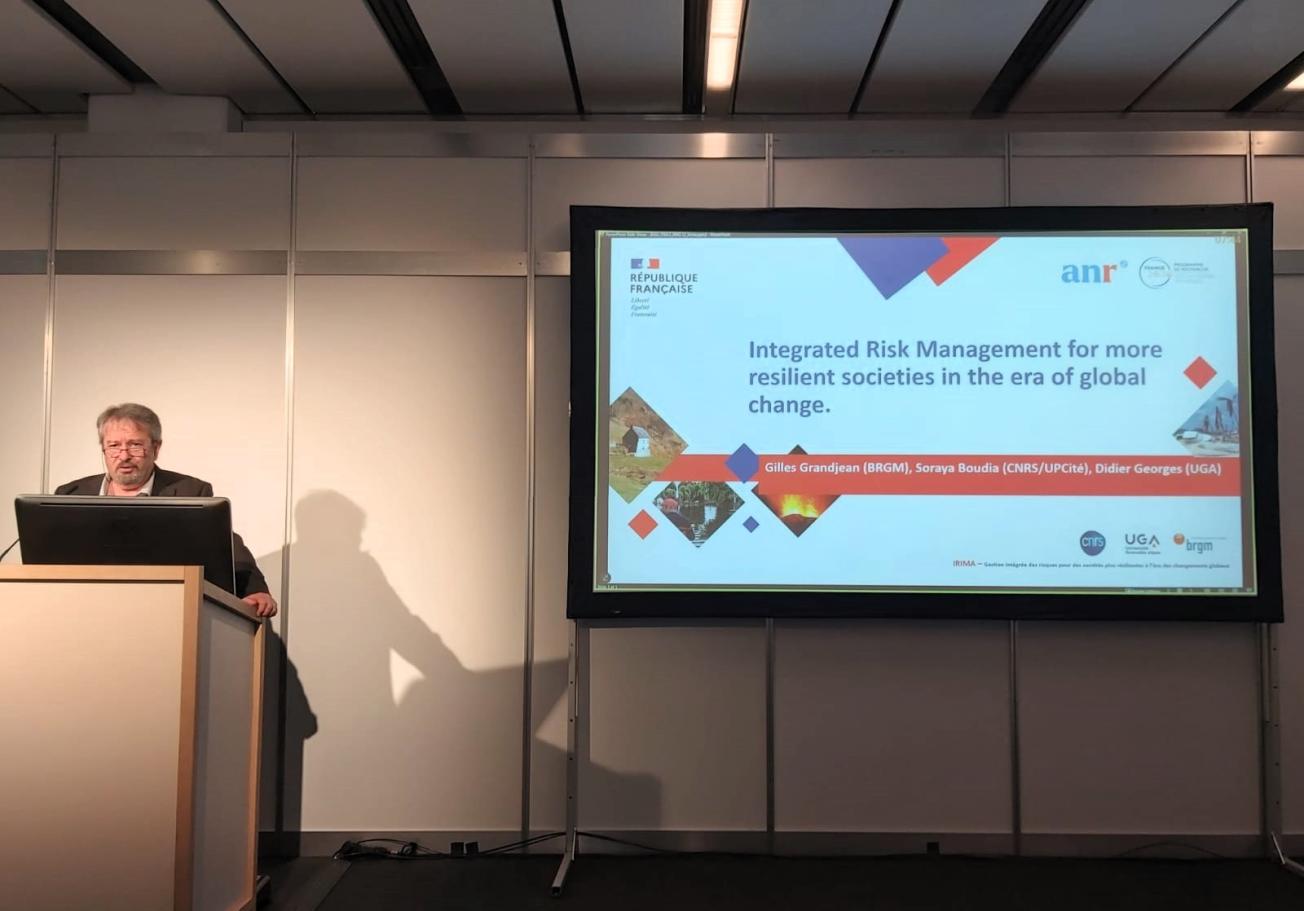
Gilles Grandjean (BRGM), co-directeur du programme Risques (IRiMa).
© PEPR Risques (IRiMa)
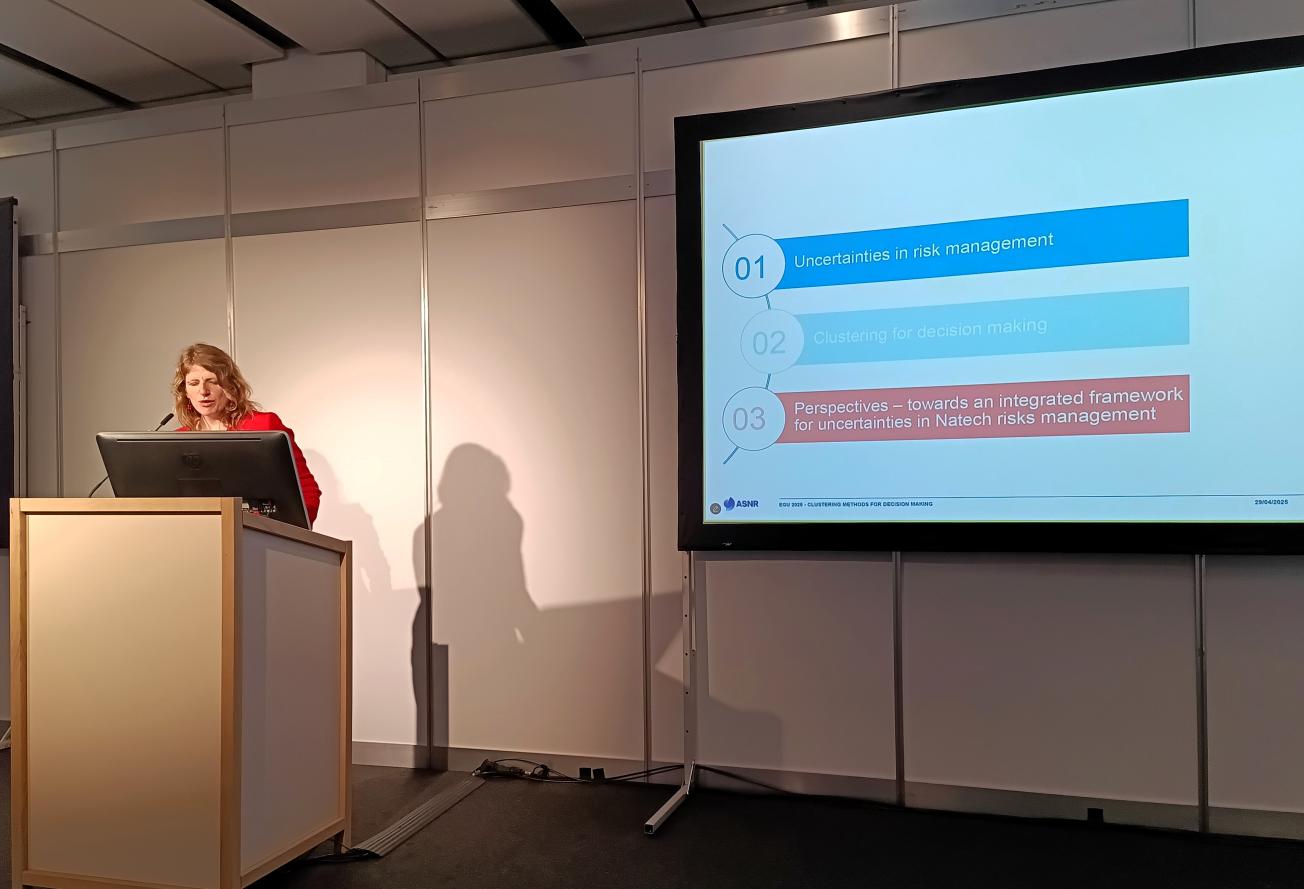
Irène Korsakissok (IRSN), co-responsable du projet Risques NaTech.
© PEPR Risques (IRiMa)
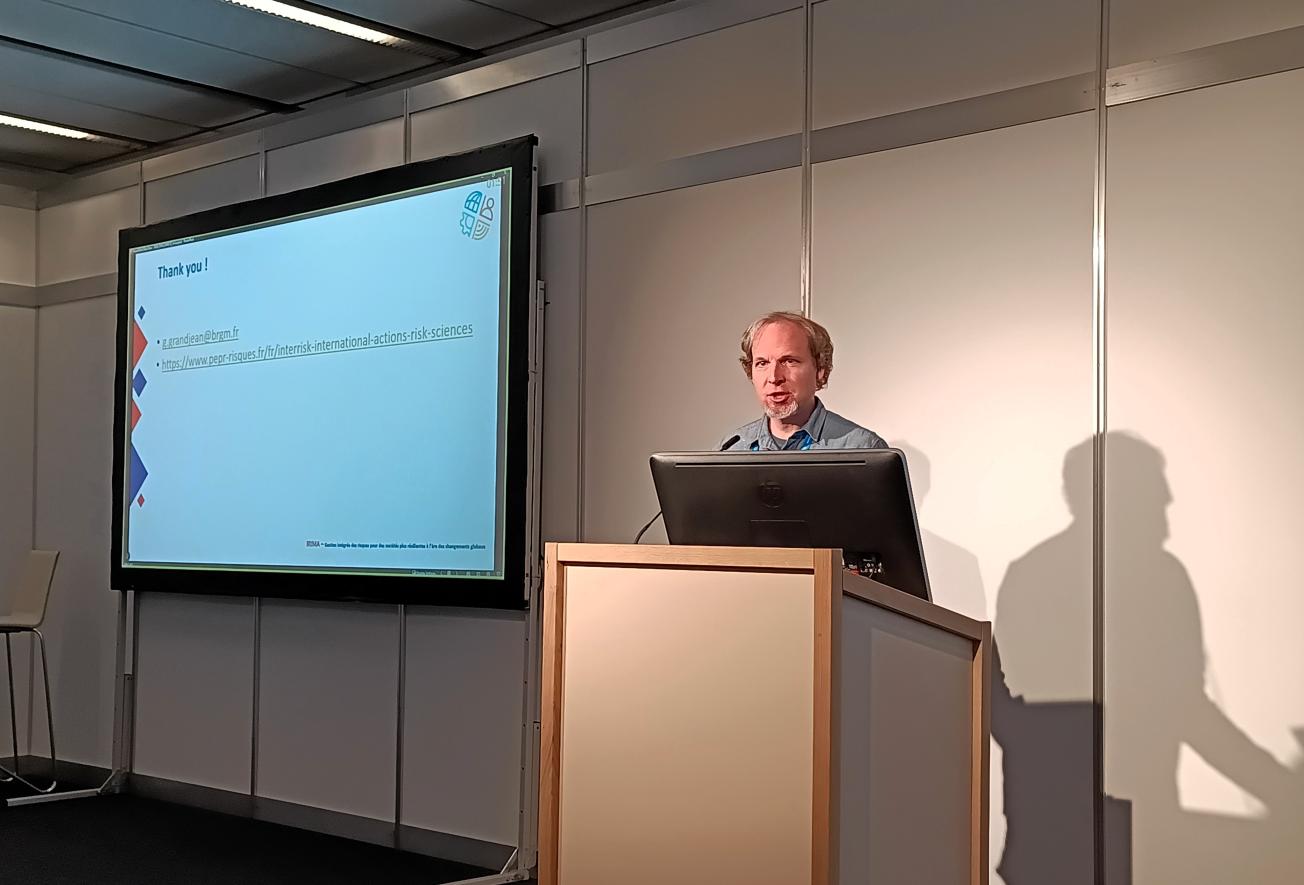
Nicolas Eckert (INRAE/Université Grenoble Alpes), co-responsable du projet IRIMONT.
© PEPR Risques (IRiMa)
The participation of the IRiMa Risks Research Program in EGU 2025 underscored its central role in research on environmental and technological risks. By highlighting innovative approaches and fostering interdisciplinary collaborations, the programme contributes to building an ambitious strategy for more resilient risk and disaster management.
The advances presented at EGU 2025 pave the way for new collaborations and concrete solutions to address the challenges posed by global change. The IRiMa Risks Research Program will continue to play a driving role in this dynamic by integrating knowledge and developing tools for a more resilient society.