


The Digital Platforms project: a response to risk-related challenges
The project is structured around four work axes:
- Infrastructure: development of the required functionalities, deployment of the infrastructure and tools, and definition of interoperability.
- Functional building blocks: creation of specific tools based on previous developments.
- Training: analysis of existing risk education systems and identification of the needs of different audiences.
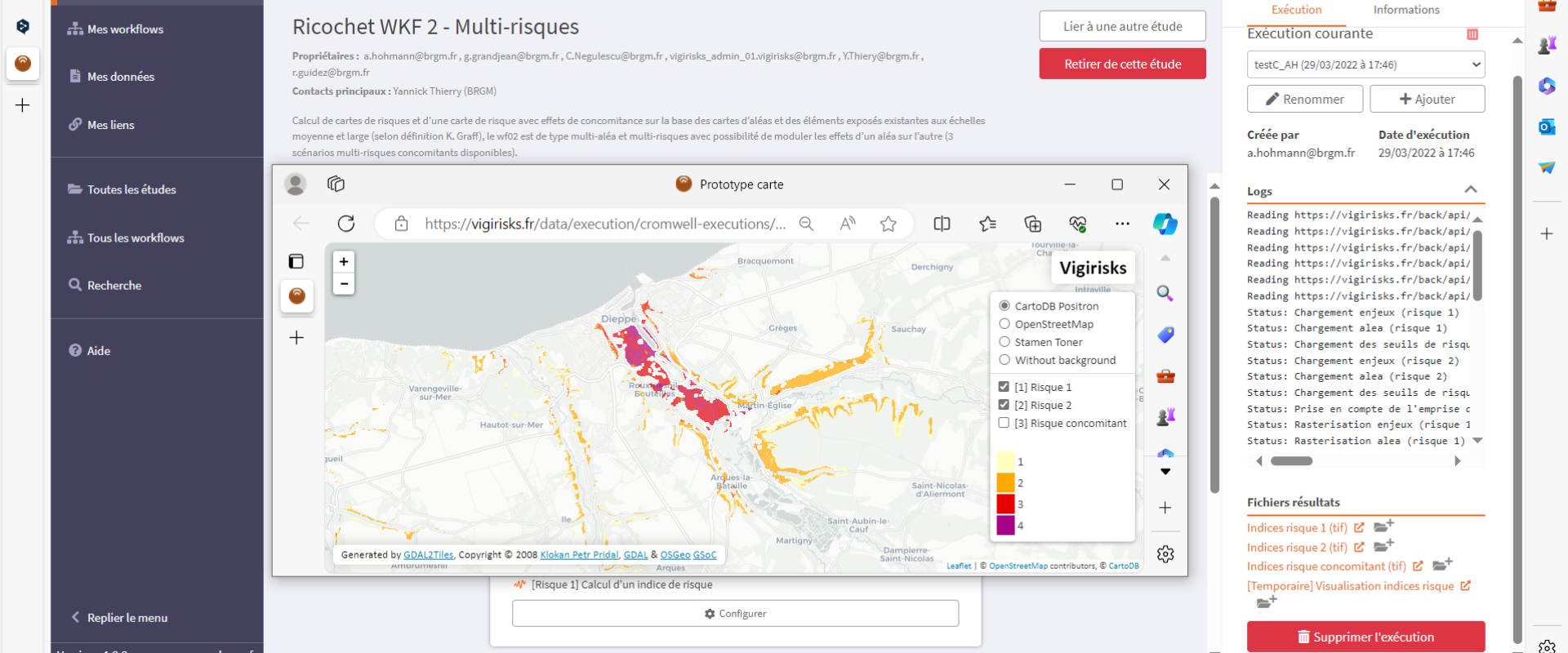
- Case studies: structuring of thematic and multi-risk scenarios, collection of needs and implementation of tools within the platform.
Main objectives
- Provide a coherent set of material resources for computation, data storage and dissemination.
- Contribute to the implementation of case studies and demonstration of results for pilot sites.
- Promote cross-fertilisation of knowledge and large-scale information sharing.
Workshop day of 19 March 2025: structuring case studies
On 19 March 2025, a workshop day was organised to work on structuring case studies, a key axis of the Digital Platforms project. This day brought together programme partners to define the research output elements to be highlighted within the IRiMa platform.
Objectives of the day:
- Define concepts, vocabulary and analytical methodology for case studies.
- Present and collectively work on use cases envisaged by partners.
- Implement the proposed methodology for several selected case studies.
Key concepts addressed:
- Pilot site: a large-scale geographical area on which one or more use cases are applied.
- Use case: application of one or more workflows to a specific case or study area.
- Scenario: textual and ordered description of a sequence of workflows.
- Workflow: technical transcription of a scenario, identifying processes and their sequencing.
- Process: individual task or simple calculation (pre-processing, post-processing, statistical processing, etc.).
Workshop outcomes:
The day initiated the activities of the “case studies” work axis and proposed steps for continuing the work. Discussions converged towards an initial working framework, while highlighting the need for adaptations in light of the diversity of use cases. This first workshop provides a solid foundation for consolidating analytical methods and tools.
Adopting a use-case-driven approach places user needs at the heart of the project. It enables development to be structured around concrete scenarios, aligns actions with clearly defined objectives, and maximises value from the earliest deliverables.
Outlook and next steps
The Digital Platforms project plans to continue its work along several axes:
- gradual integration of tools and scenarios into the IRiMa platform;
- organisation of annual workshops and regular working meetings with partners;
- continuous adaptation of methodologies to meet the needs of different thematic projects (mountains, overseas territories, coastlines, social sciences and humanities, NaTech).
These initiatives aim to strengthen risk management by providing innovative and collaborative tools to the scientific community.