



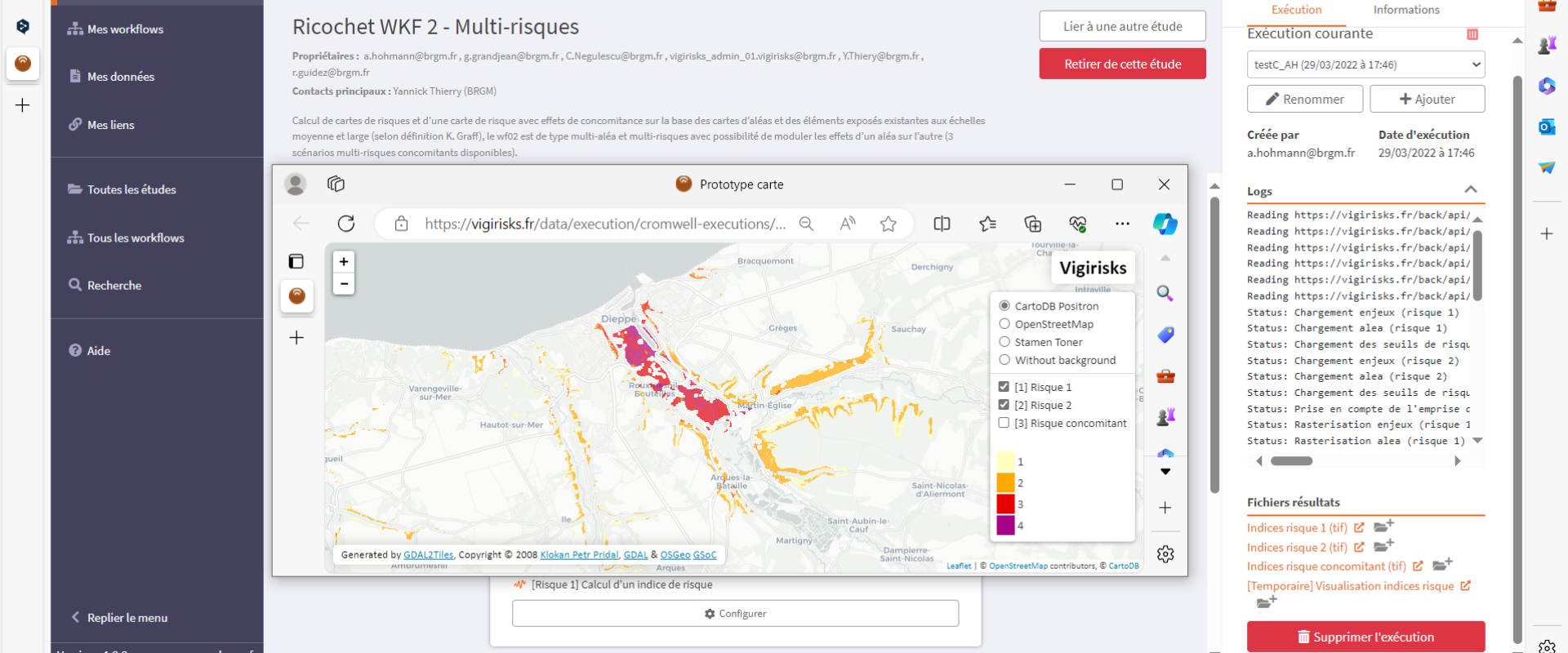
Pillar 6 provides mapping and analytical capabilities to enable the dynamic construction of scenarios in support of crisis management, and to foster knowledge sharing.
This involves in particular:
- Promoting the co-construction of initiatives involving academia, operational organizations, and citizens, in order to better understand the behavior of social and economic actors in relation to risk
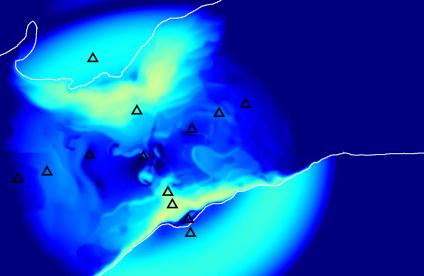
- Integrating multi-risk mapping tools into a coherent digital framework to improve the management of impacts from complex hazards
- Taking into account gradual and abrupt changes in hazards and in socio-economic/socio-environmental conditions
- Providing tools to analyze risk perception mechanisms that influence individual behavior before and during an event, as well as the acceptability of public policies
- Proposing the integration of high-performance computing (HPC) numerical modeling capacities and shared development environments (GitLab).
Challenges
- Challenge 1. Formalize a digital modeling infrastructure based on existing French research platforms dedicated to massive data analysis, HPC numerical modeling of physical processes involved in natural, technological, or environmental disasters.
- Challenge 2. Develop integrated multi-risk mapping platforms dedicated to the production of hazard, vulnerability, and risk maps for decision-making.
- Challenge 3. Aggregate methods from the social and economic sciences into a common web-based co-working tool to share the entire process of handling and managing social information.