




It is structured around six major scientific pillars:
- Pillars 1 and 2 are dedicated to cross-cutting methodological challenges: they establish the methodological foundations of conceptual frameworks and operational tools that encompass all possible pathways from data to decision-making, with context-dependent complexity and adaptability, making them particularly relevant for decision-makers.
- Pillars 3 to 5 focus on the specific challenges of risk-prone regions (mountains, coastlines, overseas territories, and industrial-urban areas), to study how different risks, whether natural, environmental, or technological, overlap in certain territories, sometimes leading to cascading effects.
- Pillar 6 focuses on development of the required digital platforms, with particular emphasis on interoperability.
Pillar 1: Science and society – risks, resilience, and adaptation strategies
Current global systemic changes – whether climatic, societal, or technological – are creating new threats for human societies. These threats and the ways to address them are the subject of extensive analysis and sometimes intense debates around issues of population and infrastructure vulnerability, as well as societal resilience and adaptation.
Pillar 2: Data, quantitative models, and algorithms for risk analysis and decision-making support
This methodological pillar concerns the continuum from observation, modeling, cascading effects, and risk metrics through to decision-making. Supported by Pillar 1, it provides high-level expertise in mathematics and engineering to assist risk science researchers in developing an increasingly comprehensive approach.
Pillar 3: Risks in mountain and coastal areas
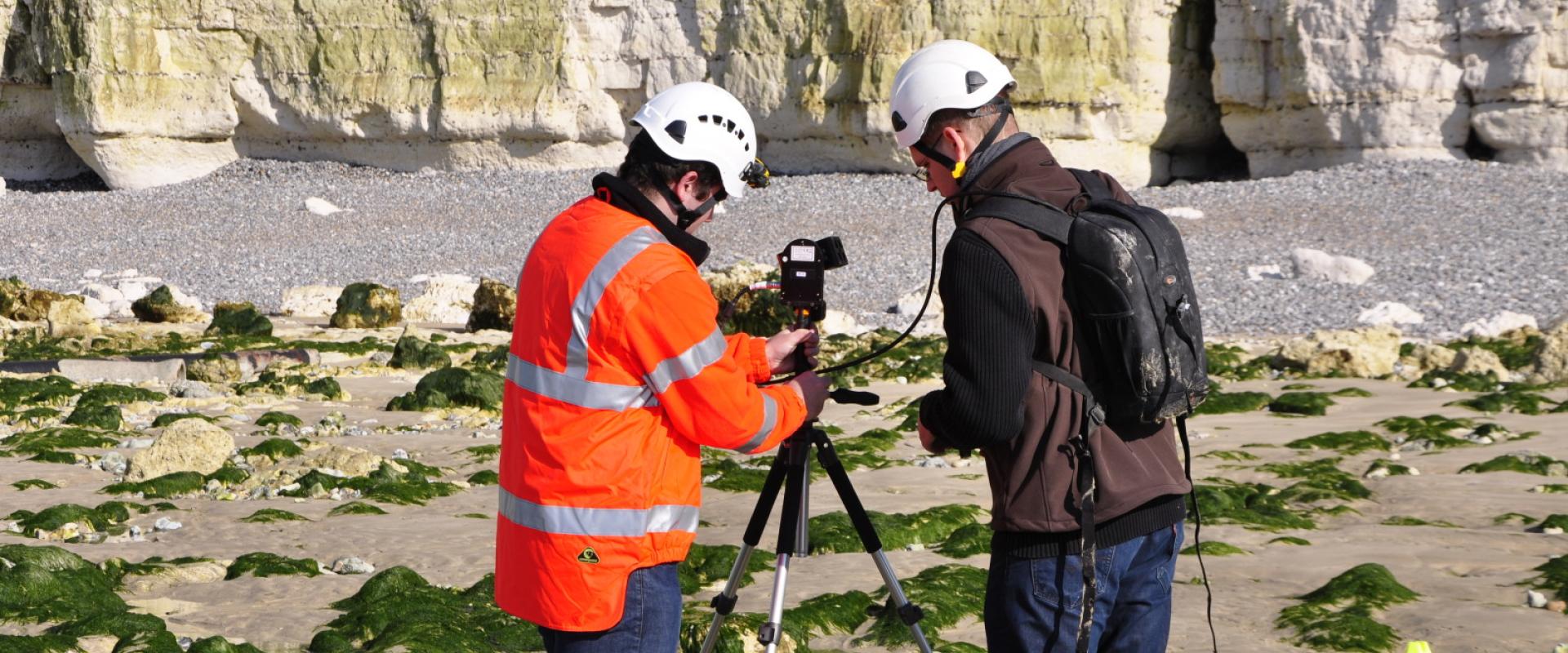
Pillar 3 encompasses all physical and social processes aimed at better understanding, predicting, and mitigating risks in mountain and coastal territories, from the characterization of natural hazards and underlying phenomena, to decision-making and societal adaptation to current and future climate and societal changes.
Pillar 4: Risks in urbanized and industrial areas/densely populated zones
This pillar addresses, in an interdisciplinary and integrated manner, the scientific challenges posed by crises occurring in (peri-)urban and/or industrialized areas where multiple vulnerabilities converge. A crisis is understood here as a process encompassing different phases: the preparation/planning period, the emergency phase focused on real-time crisis management and the mitigation of short-term impacts, and finally the remediation/long-term resilience phase.
Pillar 5: Risks in overseas territories and the intertropical zone
Pillar 5 focuses on the intensive and frequent seismic and hydrometeorological hazards affecting populations in overseas territories and intertropical regions: earthquakes, volcanic eruptions, tsunamis, gravitational instabilities, floods/marine flooding, coastal erosion linked in particular to cyclones, and climate change.
Pillar 6: Platform infrastructure
Risk assessment requires a dedicated platform infrastructure to capture complexity, bring together the full range of necessary expertise, and enable cross-fertilization and broad knowledge sharing. Pillar 6 provides the program’s targeted projects with mapping and analytical capabilities to dynamically construct risk scenarios in support of crisis management, and to foster knowledge dissemination.
Education and training
Many public and private socio-economic partners highlight the need to train, through research, the future leaders of risk, disaster, and crisis management, so that they are able to develop innovative management schemes, with a holistic vision. The IRiMa Risks Research Program will propose several instruments to meet this challenge.
Discover the INTERRISK project.