

Challenges
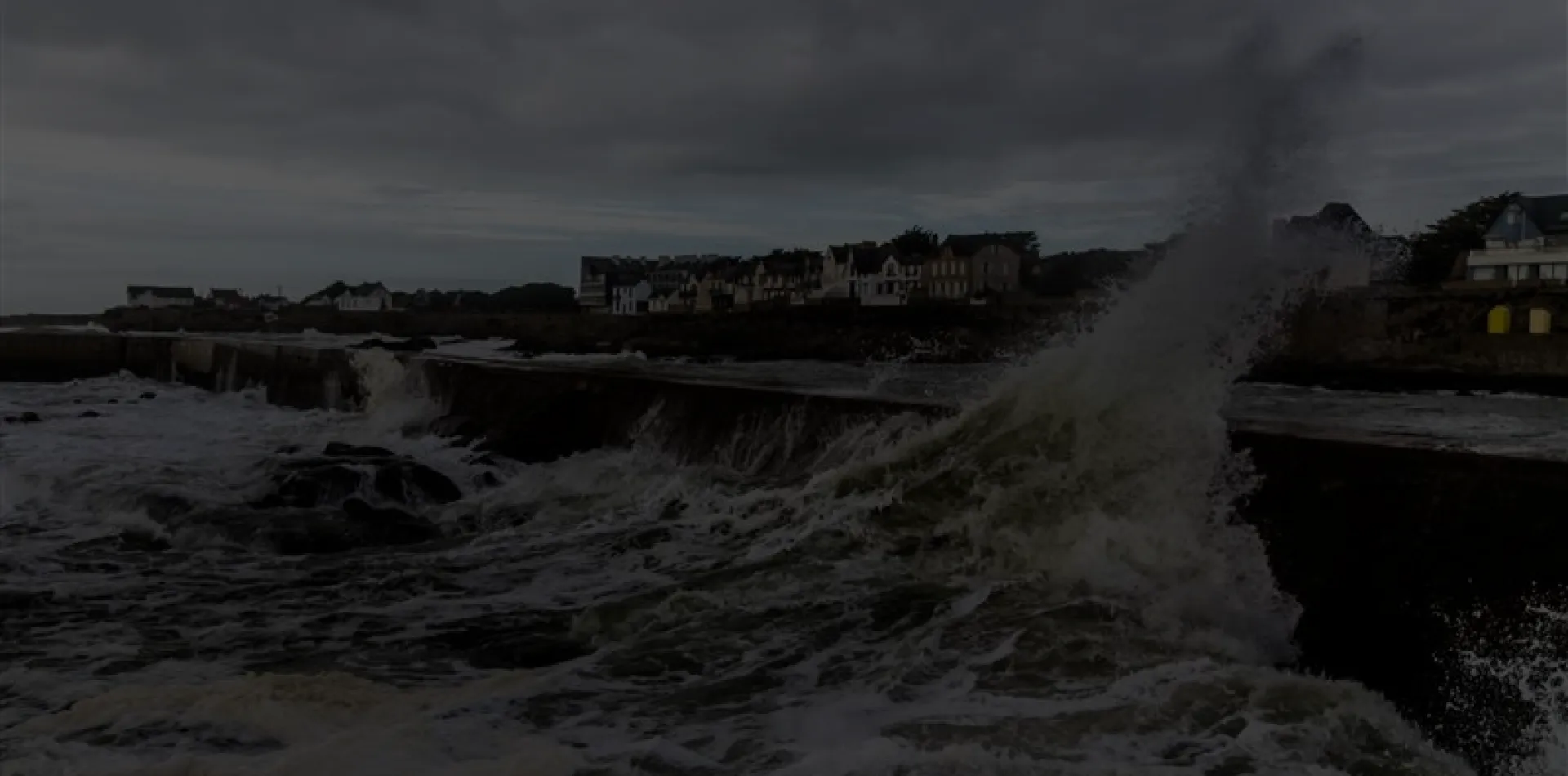
Coastal areas concentrate nearly half of the world’s population within a 100 km-wide coastal strip, with nearly 11% living in low-lying areas relative to sea level. These attractive territories, which host growing numbers of people and activities, face hazards of increasing magnitude. They are in particular subject to a global phenomenon of erosion, generally attributed to reduced sediment supply from rivers, and exacerbated by rising sea levels. A better understanding of coastal hazards and risks is needed to prepare local societies for challenges related to global systemic change.
In this context, the IRICOT research project, the third targeted project of the IRiMa Risks Research Program, seeks to address four scientific bottlenecks:
- Insufficient knowledge of past coastal hazards and anthropogenic impacts on the environment.
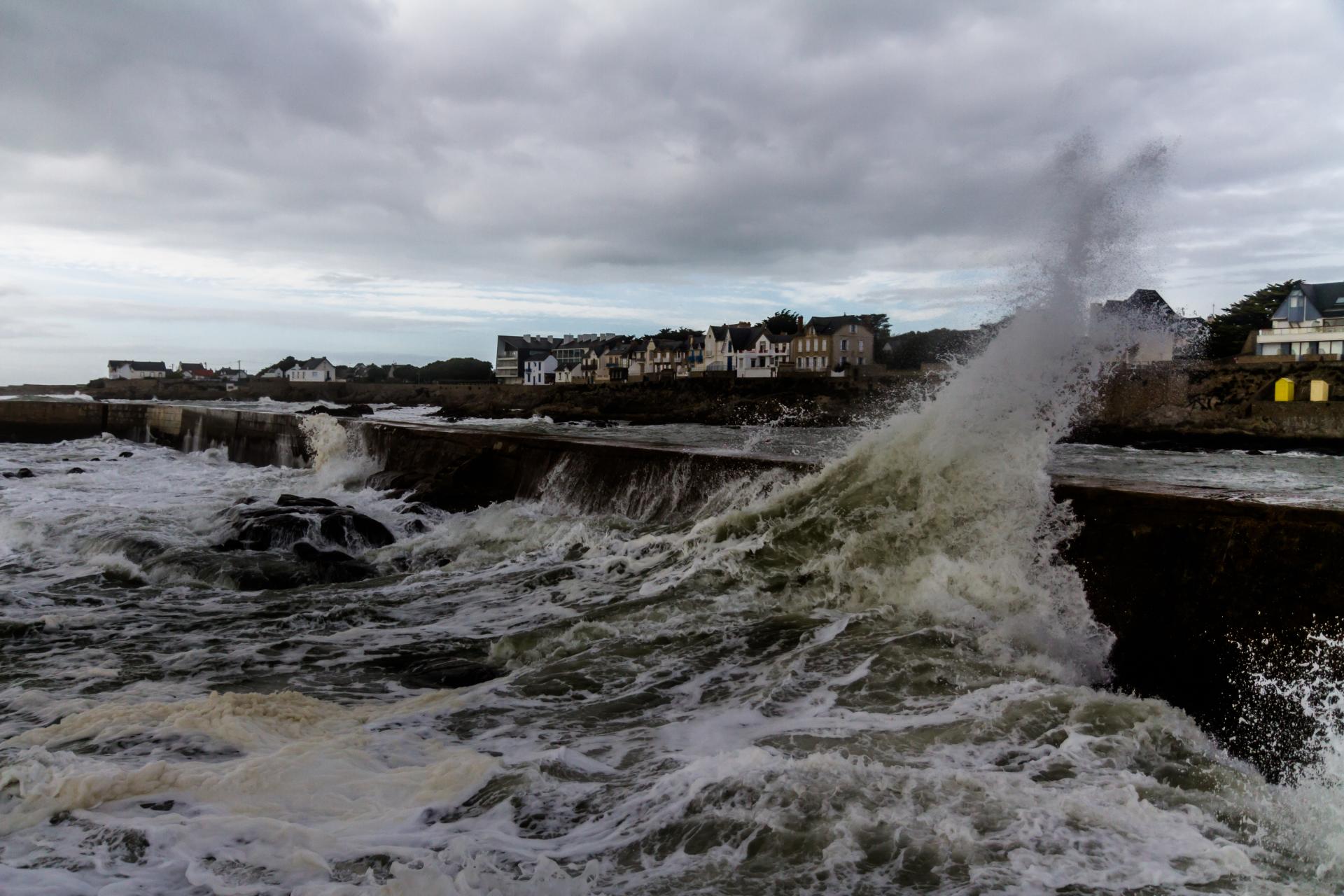
- Incomplete understanding of extreme events, particularly wave-induced erosion processes during storms.
- Difficulty predicting coastal hazards at intermediate timescales (seasonal, multi-annual, and multi-decadal).
- The need to integrate the specificities of these territories into adaptation strategies.
Key figures
-
7.00years
-
4.00Four scientific bottlenecks under study
-
14.00partners
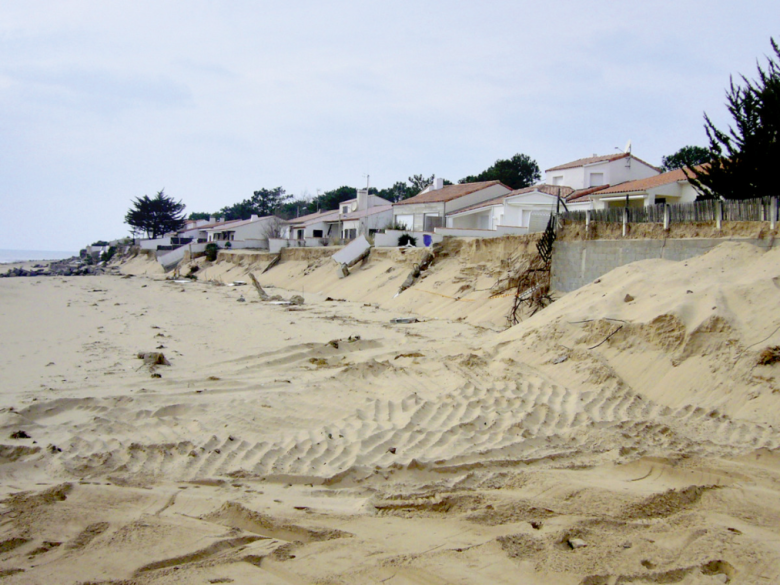
Dégâts sur les maisons causés par l’érosion de la dune à la Tranche-sur-Mer, suite à la tempête Xynthia (Vendée, 2010).
© BRGM - Rodrigo Pedreros
Objectives and expected outcomes
The IRICOT targeted project aims to generate new transdisciplinary knowledge to support coastal risk management and the development of adaptation strategies. More specifically, it seeks to:
1. Shed light on past knowledge and lessons in these domains
Through a sociohistorical analysis of coastal hazard management and their impacts, and a better understanding of anthropogenic effects on the environment that amplify current crises. In particular:
- Analyze the reliability of historical sources documenting past coastal hazards and their impacts
- Assess the impact of 20th-century to present-day human management of the Gironde estuary using numerical hydrodynamic modeling of extreme water levels and their role in the progressive tidal amplification observed since 1950
- Study past practices, knowledge, or lack thereof in territorial management of natural risks and community resilience to better contextualize future adaptation strategies to climate change
- Model marine flooding phenomena in an estuarine zone with major industrial and urban interests (Le Havre), in order to develop a virtual reality scenario for local stakeholders.
2. Improve knowledge of extreme events
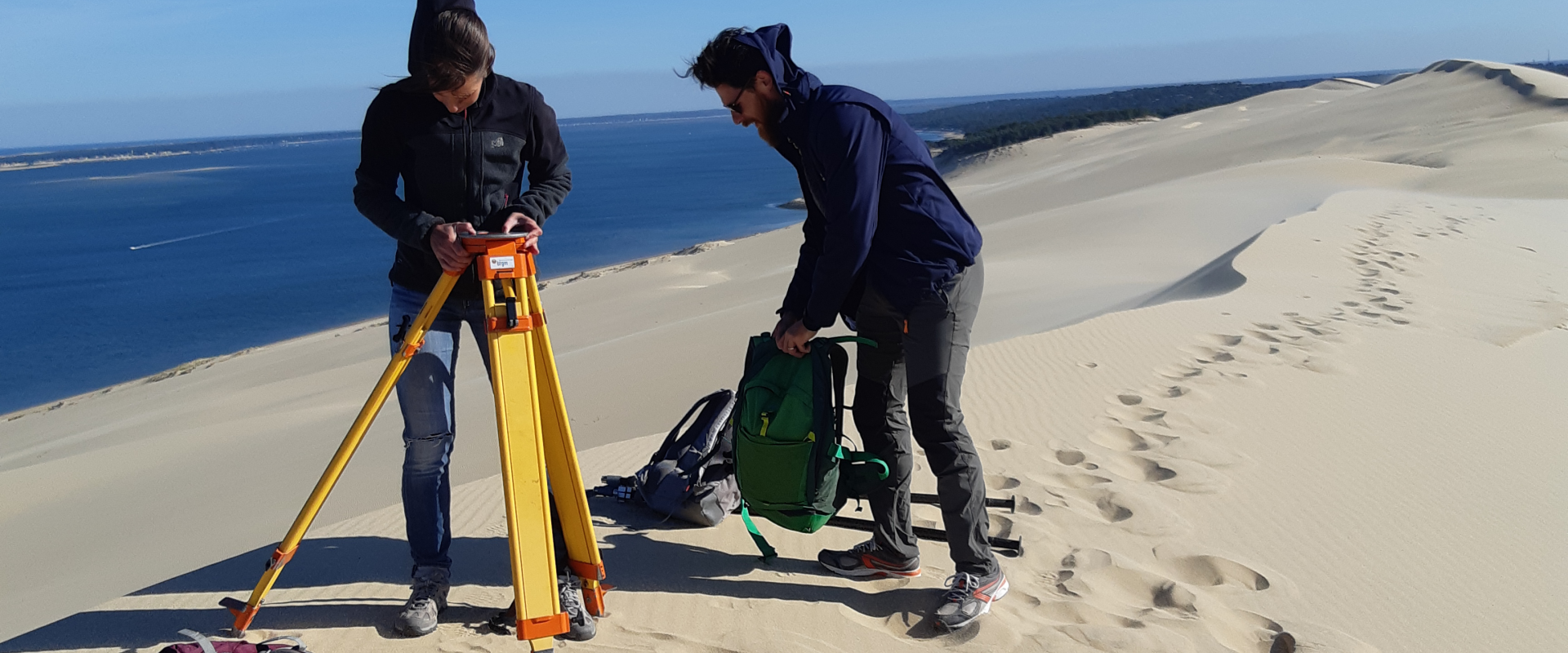
By creating an original database based on the measurement of dune, beach, and cliff erosion during major storm events. This requires fieldwork under extreme conditions, deploying a large number of physical sensors to measure waves, winds blowing over dunes, associated sand fluxes, and cliff destabilization. In a second phase, this knowledge will be integrated into predictive models of coastal morphodynamics, tested through simulations of recent extreme events to evaluate their predictive capacity for risk prevention workflows.
3. Better predict hazards at seasonal to decadal timescales
These timescales, insufficiently addressed in coastal risk forecasting, are nonetheless relevant for implementing adaptation strategies at the territorial level. The objective is to better understand, model, and predict these hazards across various environments (sandy coasts, estuaries) by producing new indicators of system state for the Atlantic and Mediterranean coasts of mainland France, from the local scale to the entire coastline, with spatial resolution down to about 100 meters. The goal is to develop a demonstrator of climate services for forecasting coastal risks at seasonal to decadal timescales.
4. Provide a new perspective on adaptation strategies to risks
By examining the impact of multiple coastal hazards on well-being, economic protection measures, and the necessary transformation of risk governance, this axis focuses on:
- A literature review on multi-risk in the social sciences to better understand the complex issues of managing coastal risks linked to global systemic change, considering other types of risks related to development or industrialization
- Analysis of residents’ relationship to multiple risks through quality-of-life measurement and expectations regarding services provided by infrastructures
- Characterization of coastal property in order to identify and analyze French coastal areas potentially exposed to residential relocation scenarios
- Study of governance mechanisms involving forms of collective mobilization (development of a tool to monitor beach rescue interventions, and study of the CoastSnap Nouvelle-Aquitaine program on beach and shoreline evolution) to better understand coastal zone evolution processes and design shared territorial projects.
Given the wide range of disciplines involved, including physics, geography, history, social sciences, and economics, and the large number of participating teams, the IRICOT project seeks to bring together a broad research community in coastal risk management to address these issues from a systemic and interdisciplinary perspective.
Study sites
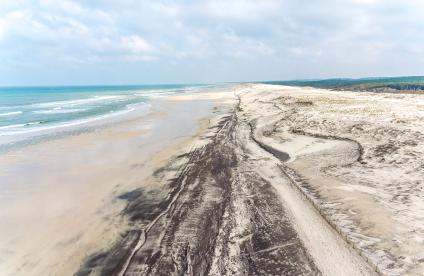
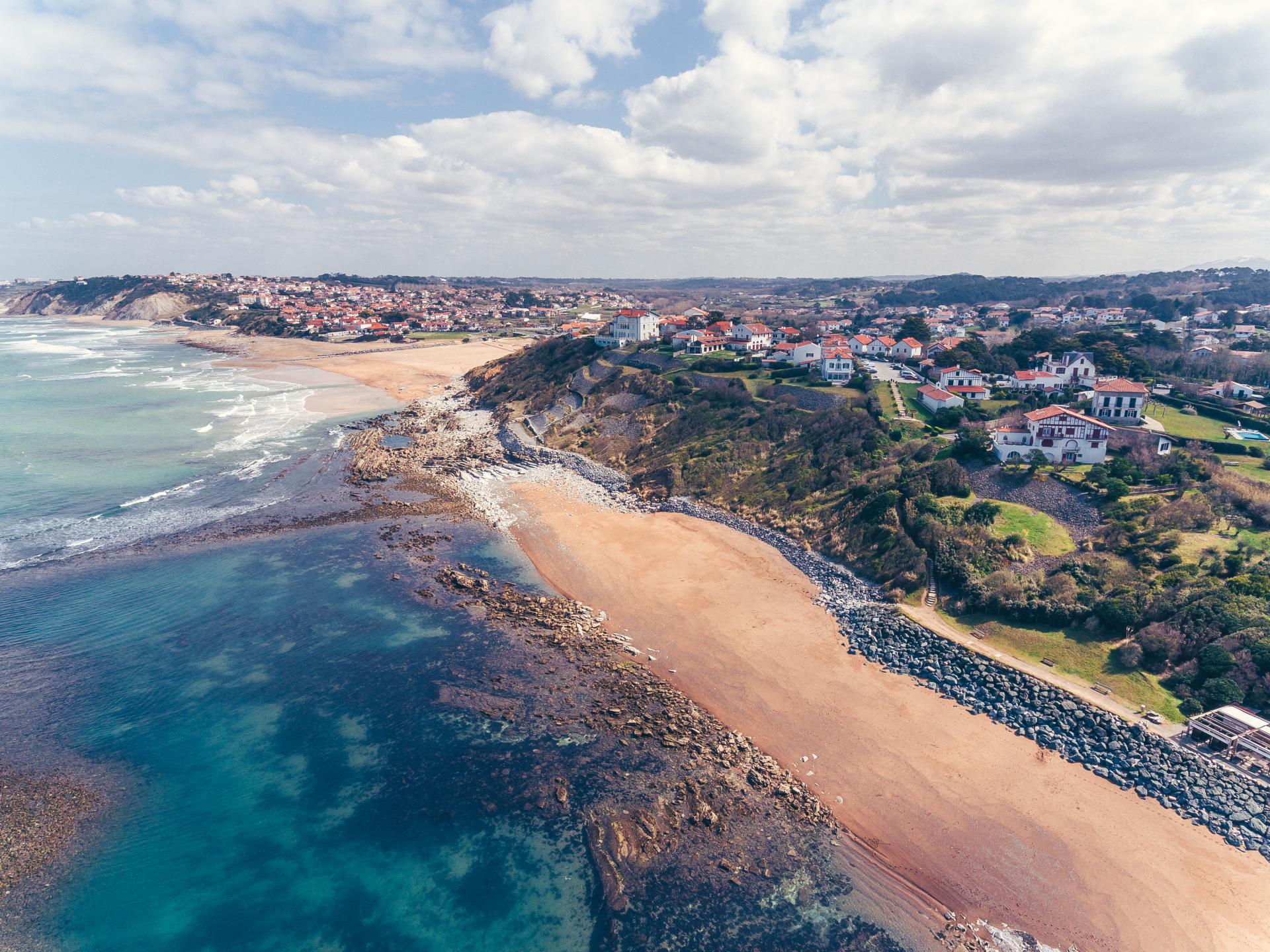
IRICOT covers the main types of coasts: from open coasts exposed to waves (sandy or cliffed beaches) to semi-enclosed coasts dominated by tides (estuaries and bays). All mainland French coastlines are considered, including sites on the English Channel, Atlantic, Mediterranean, and in Corsica. Project members propose a focus on the Nouvelle-Aquitaine coast in order to concentrate efforts on a few pilot sites and pool available means and data, both in the environmental domain and in the social sciences.
Strong interactions are planned with the IRIMONT, NaTech Risks, and Digital Platforms targeted projects of the IRiMa Risks Research Program, particularly for sociohistorical analysis and for the study of estuarine pilot sites (Seine and Gironde), areas with high stakes due to industrial and radiological risks.
Co-leaders
Aldo Sottolichio, Professor at the University of Bordeaux, coordinator and leader of IRICOT.
With over 20 years of research experience, he focuses on the hydro-sedimentary dynamics of semi-enclosed coastal systems (estuaries and lagoons), combining in situ measurements and numerical modeling, from tidal timescales to the century scale. Author of more than 70 international articles, he has supervised around ten PhDs, led about a dozen national projects, and participated in three ANR projects and two international projects. He has notably contributed to improving understanding of transport, erosion, and deposition mechanisms of fine sediments in macrotidal estuaries, processes responsible for their progressive silting and vulnerability to marine flooding. Since 2021, he has coordinated the regional research network R3 RIVAGES, dedicated to coastal risks in Nouvelle-Aquitaine, fostering interdisciplinary approaches
Cyril Mallet, Head of the Coastal Risks and Climate Change Unit at BRGM, co-leader of IRICOT.
With over 20 years of experience in research and engineering in the field of coastal hydrosedimentary dynamics, he works in the area of risk management and adaptation for coastal regions.
Partners
IRICOT brings together specialists in coastal dynamics in environmental sciences (physics, geology, and fluid mechanics) and in social sciences (history, economics, and geography).
It includes 14 key national actors in coastal risk research:
- University of Bordeaux (coordinating institution)
- University of La Rochelle
- University of Pau and Pays de l’Adour
- University of Poitiers
- University of Perpignan
- University of Caen
- University of Rouen
- University of Western Brittany
- INRAE
- CNRS
- BRGM
- IRSN
- Météo France
- CEREMA