
News

Challenges
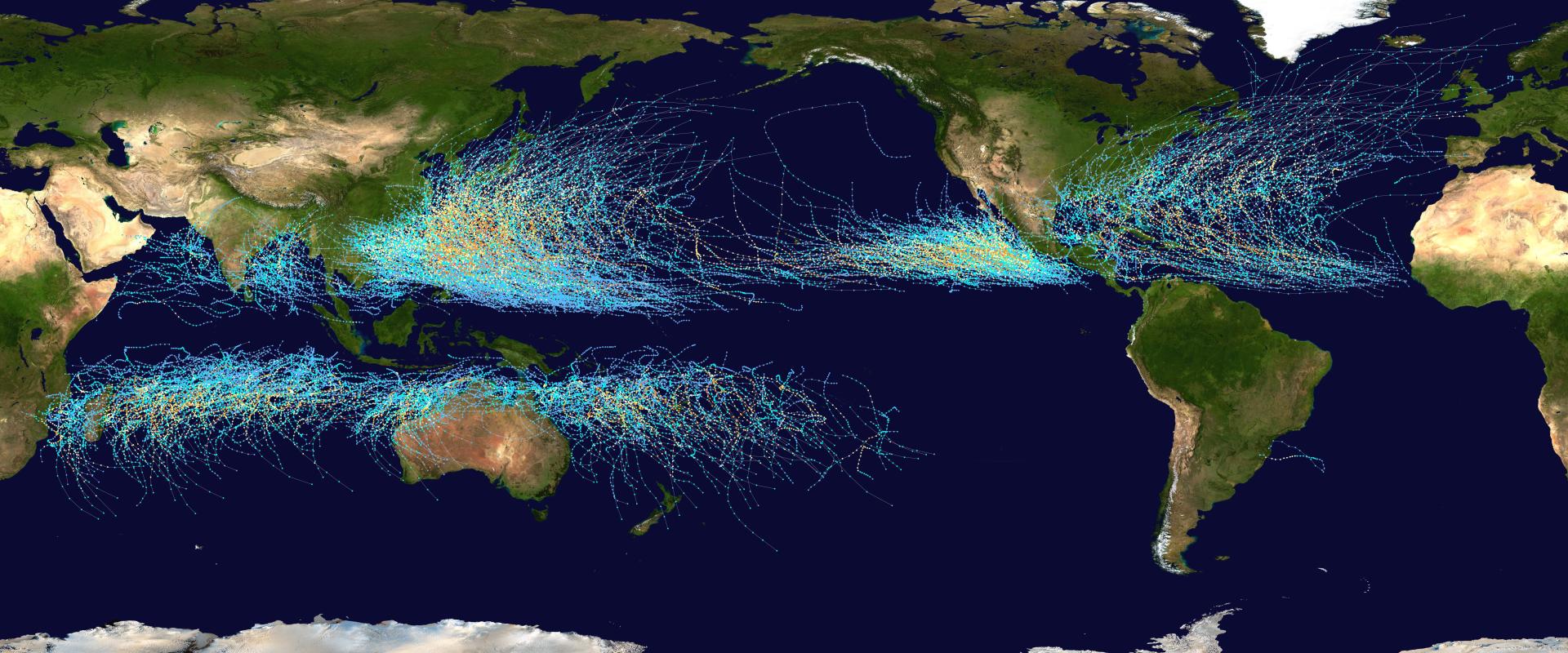
Populations in Overseas Territories and intertropical zones are exposed to intense and frequent telluric and hydrometeorological risks such as earthquakes, volcanic eruptions, tsunamis, as well as gravitational hazards, flooding/marine flooding, and coastal erosion linked in particular to cyclones and climate change.
Given the geographical and social specificities of these territories (insularity, distance from mainland France, large proportion of the population exposed to one or several hazards, social and political tensions, etc.), specific knowledge of local prevention, risk management, adaptation, and resilience capacities is required. Improving the understanding of hazards and vulnerabilities is also essential.
Scientific challenges remain, particularly regarding the detection of precursory signals of volcanic eruptions, the characterization of rainfall thresholds as triggers for slope instabilities, the resilience of observation networks, and the development of integrated risk management models to characterize issues and assess vulnerabilities to various hazards. It is therefore crucial to reconsider the risks faced by overseas populations in order to accurately model cascading phenomena, as well as the superposition of hazards and vulnerabilities in these territories, thereby contributing to the development of effective policies for risk management and resilience.
Objectives
In this context, the Overseas Risks project, Targeted Project No. 5 of the IRiMa Risks Research Program, seeks to address three main objectives:
- Identify new observables for studying natural hazards and their anthropogenic impacts at large spatial-temporal scales
- Develop holistic and integrated models of complex processes, accounting for uncertainties related to climate change projections and the integration of coupled predictive models, in order to move beyond siloed approaches and study interactions among phenomena, including cascading effects
- Develop integrated risk management strategies adapted to overseas and intertropical areas, capable of addressing the consequences of extreme and cascading events that generate multiple risks (eruptions, instabilities, tsunamis, and flooding).
The project focuses on:
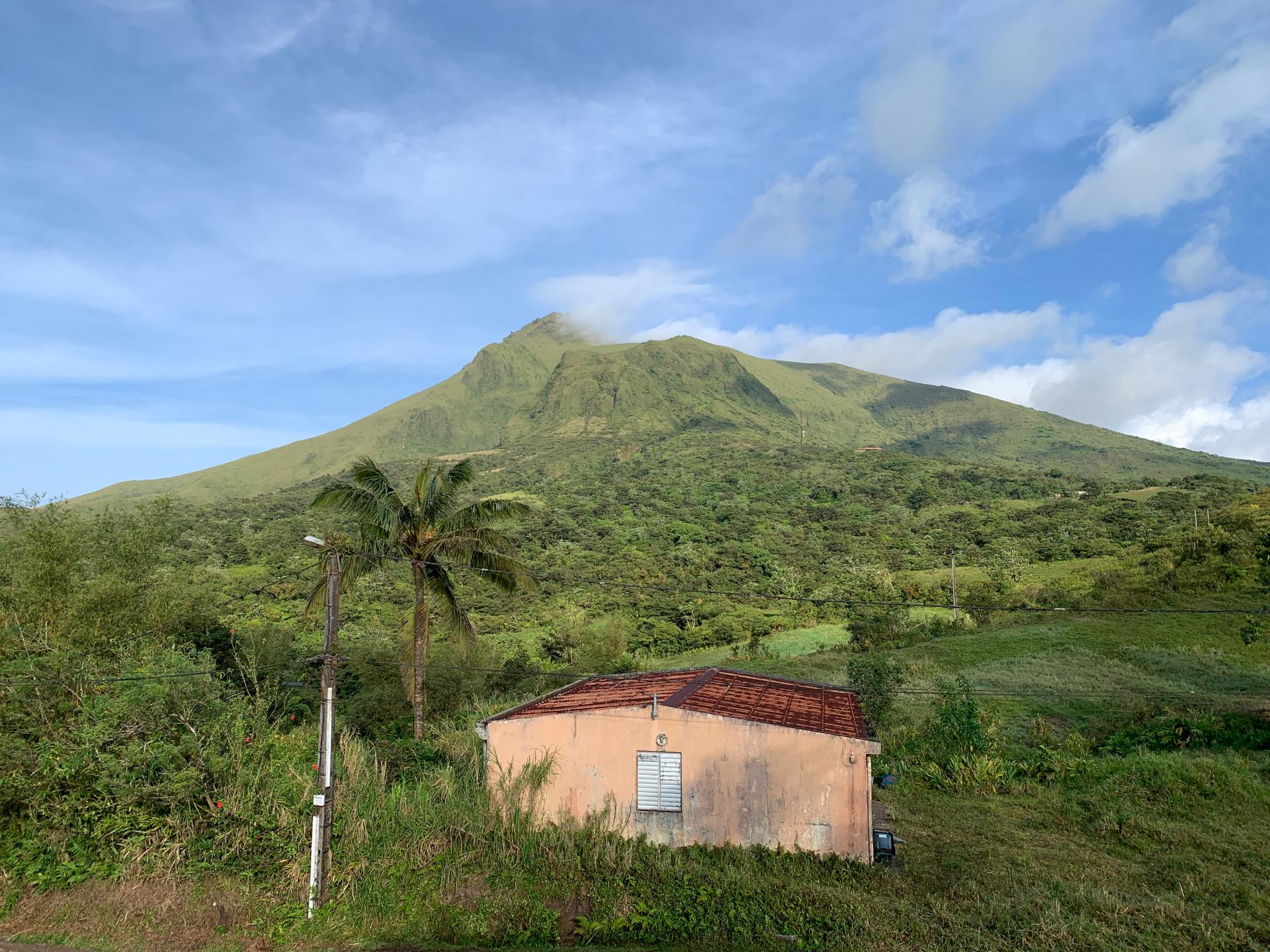
- Seismo-volcanic risks in the French Antilles, where the Montagne Pelée volcano on Martinique has entered a reactivation phase in recent years
- Tsunami risks in the Indian Ocean, particularly on Mayotte, which has been experiencing a seismo-volcanic crisis for over four years
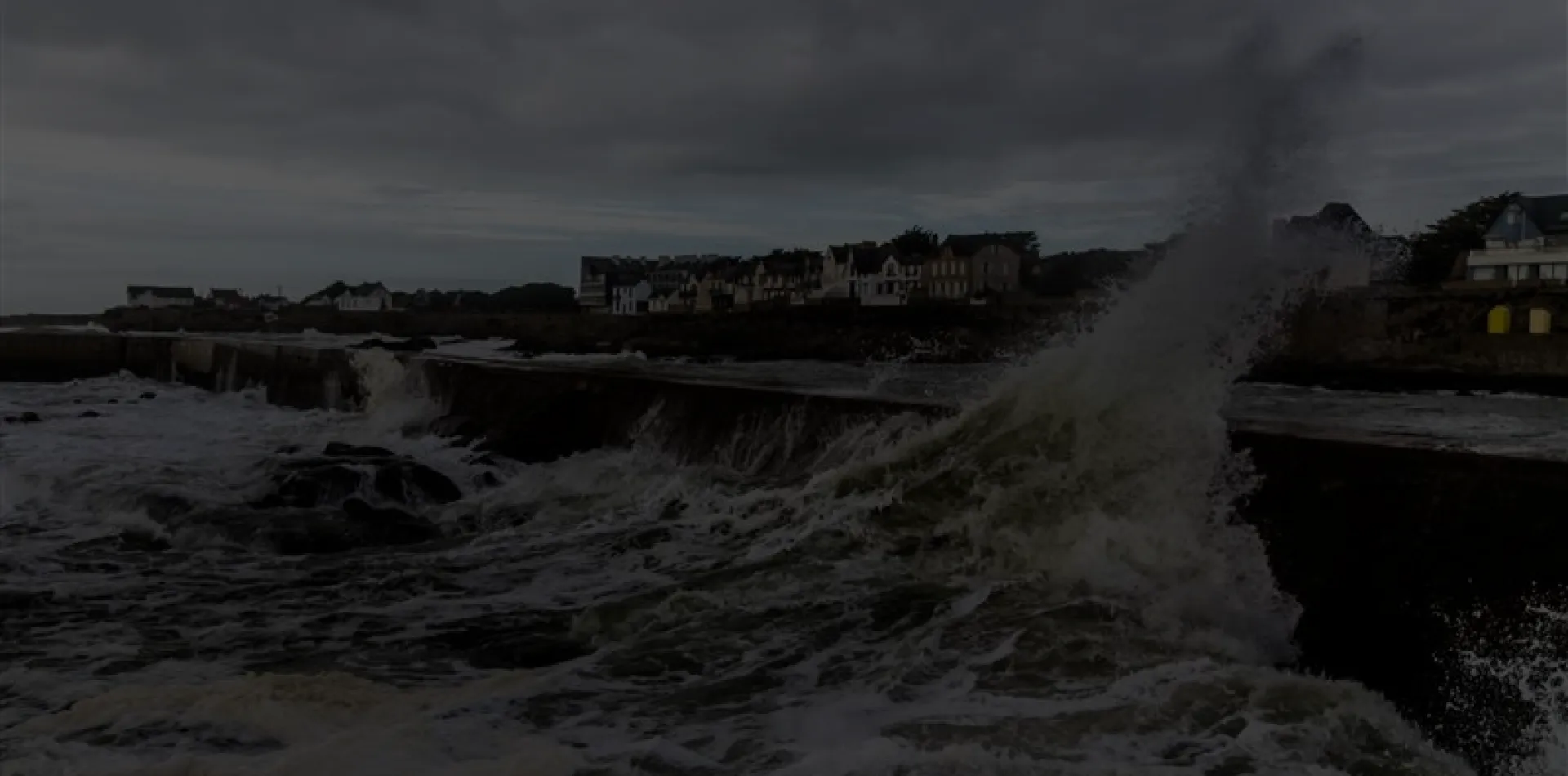
- Hydro-climatic risks in the Pacific, notably the management of cyclone risks (marine flooding, landslides) in New Caledonia and the adaptation of coral islands to the effects of climate change (coastal erosion) in French Polynesia.
Research and developments carried out on the risks identified in each target zone may subsequently be extended to other areas.
Key figures
-
7.00years
-
3.00risk types
-
3.00study zones
-
7.00partners
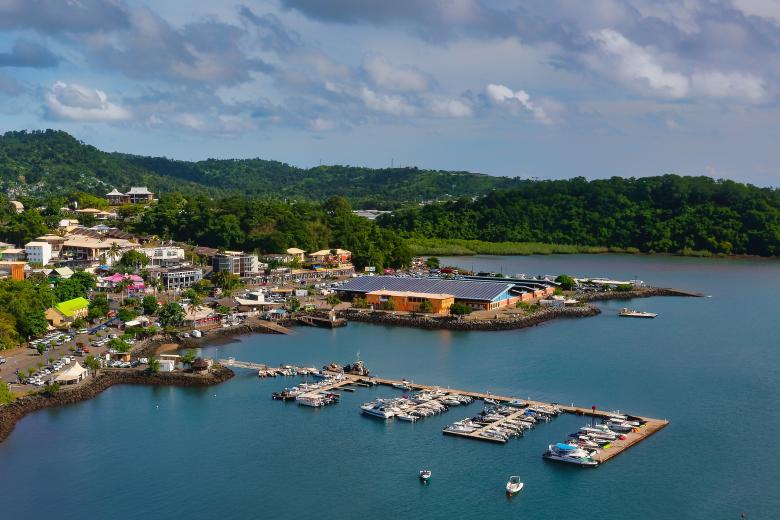
Port de Mayotte
© Adobe Stock
Research axes and expected outcomes
The research work is organized around three axes:
Developing innovative multi-sensor instrumentation for observing seismo-volcanic phenomena and monitoring building damage within a neighborhood
This axis focuses on creating a borehole sensor network on Martinique to detect early disturbances in the physico-chemical processes of magma storage systems, which may signal potential magma ascent. A major challenge is to design a resilient network capable of acquiring data before, during, and after an eruption. Scientists also deploy a low-cost sensor network to monitor in real time the vibrational response and deformation of buildings (private, strategic, and critical infrastructure) in order to characterize the diversity of damage within a given area, and among similar building types. They further analyze the social and political dimensions of deploying such instrumentation, the ways it can be integrated into existing observation and monitoring systems, its adoption by various stakeholders (citizens, public and private actors), and its impact on collaborations among scientists, citizens, and public authorities in understanding, reducing, and managing risks.
Estimating damage and socio-economic impacts linked to tsunami risk
This axis focuses on developing a chain of tools that link advanced mathematical and numerical models with geophysical, geological, civil engineering, geographic, and economic data to analyze hazards, risks, and socio-economic impacts of tsunamis generated by landslides in an active seismo-volcanic context.
Scientists rely on data collected by the Mayotte Volcanological and Seismological Monitoring Network (REVOSIMA) and prior research. They refine tsunami-generating sources corresponding to the most probable and damaging scenarios (an essential step in tsunami risk assessment) and simulate wave generation near these sources. These tools will help characterize exposure and vulnerability and quantify impacts on housing and infrastructure on Mayotte. Vulnerability analyses will identify levers for prevention and crisis management adapted to the local context. These insights are essential for developing decision-making support tools and co-designing preventive solutions with territorial stakeholders, such as decision-makers, managers, and local populations.
Cyclone crisis management and coral island adaptation
This axis addresses, first, risks linked to extreme cyclone events, with New Caledonia as the study area, located along the path of Pacific cyclones. The objective is to characterize marine flooding and landslide hazards during crisis situations, ultimately aiming to automate hazard forecast bulletins associated with cyclone landfalls.
Scientists rely on data collected by the Mayotte Volcanological and Seismological Monitoring Network (REVOSIMA) and prior research. They refine tsunami-generating sources corresponding to the most probable and damaging scenarios (an essential step in tsunami risk assessment) and simulate wave generation near these sources. These tools will help characterize exposure and vulnerability and quantify impacts on housing and infrastructure on Mayotte. Vulnerability analyses will identify levers for prevention and crisis management adapted to the local context. These insights are essential for developing decision-making support tools and co-designing preventive solutions with territorial stakeholders, such as decision-makers, managers, and local populations.
Second, it focuses on risks related to climate change on coral islands, with as pilot sites Bora Bora (a high island with an urbanized barrier reef) and the nearby uninhabited atoll of Tupai in French Polynesia. Scientists aim to characterize shoreline evolution since the 1950s, the protective and sediment-producing role of coral reefs, and inhabitants’ perceptions of observed phenomena. Laboratory experiments are used to assess coral responses to climate hazards (sea-level rise and wave forces), and these data are used in numerical simulations of coastal erosion based on future scenarios. These results support the development of coastal evolution trajectories and the identification of possible adaptation strategies based on nature-based solutions.
Co-leaders
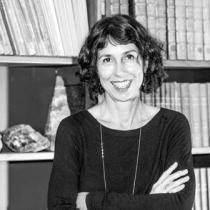
Anne Le Friant (Institut de Physique du Globe de Paris, Université Paris Cité) coordinates Pillar 5 of the IRiMa Risks Research Program and the Overseas Risks targeted project. She has expertise in marine geophysics, geology, tephrochronology, and numerical simulations of gravitational instabilities around volcanic islands and associated tsunamis. She has led several national and international projects, co-led the international IODP 340 expedition, coordinated the ANR CARIB project, and participated in 15 oceanographic campaigns. Since 2016, she has been Deputy Director of the IPGP, in charge of observatories, and is a member of several local and national councils and committees, including COPRNM (Advisory Council for Major Natural Risk Prevention).
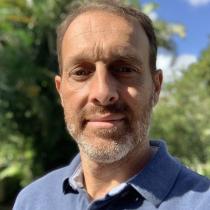
Ywenn De la Torre (Regional Director, Guadeloupe, BRGM) is an expert in coastal risks related to climate change. He has specialized in the tropical coasts of French overseas territories as well as internationally. He initiated and implemented several coastal observatories in the Indian Ocean and the Caribbean. He founded the CARIBCOAST project and is a member of the expert committee of the Association of Caribbean States. He has been teaching for over 20 years at several universities in France and elsewhere.
Partners
The project consortium brings together researchers in geology, geophysics, mathematics and numerical modeling, civil engineering, geography, social sciences, and economics, from various research institutions:
- IPGP – Institut de Physique du Globe de Paris (coordinating institution)
- BRGM – Bureau de Recherches Géologiques et Minières
- CNRS – Centre National de la Recherche Scientifique
- UGA – Université Grenoble Alpes
- IRD – Institut de recherche pour le Développement
- INRIA – Institut National de Recherche en sciences et technologies du numérique
- Université de Montpellier 3 – LAGAM (Laboratoire de Géographie et d’Aménagement de Montpellier)