

Context and objectives
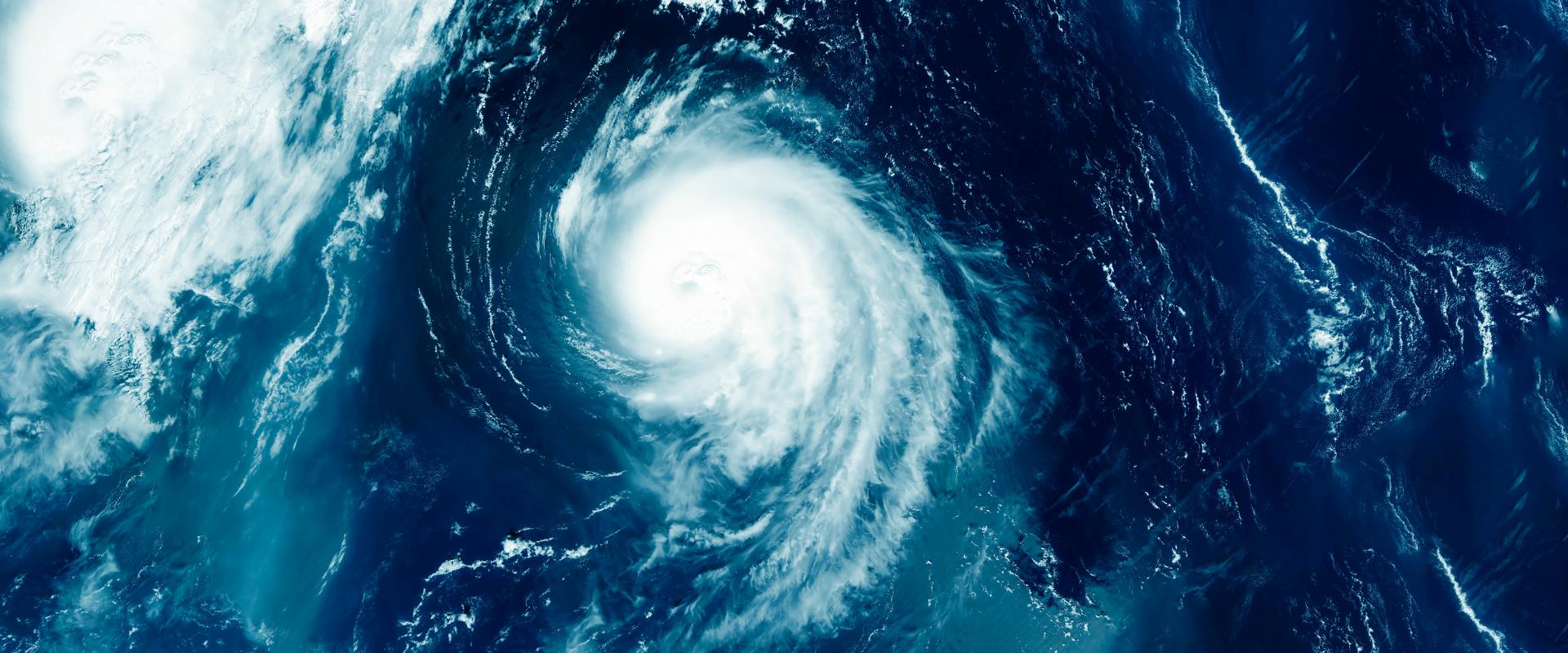
The devastating effects of Cyclone Chido and Tropical Storm Dikeledi on densely populated areas and informal settlements have prompted a reassessment of habitability in Mayotte in the face of worsening environmental risks. These extreme weather events raise pressing questions:
- To what extent is a sustainable and dignified life possible on the island, particularly in terms of access to essential resources such as water, food, housing, and security?
- How might the intensification of natural hazards — such as high winds, flash floods, and landslides — reshape the ways in which inhabitants occupy, dwell in, and develop their territory?
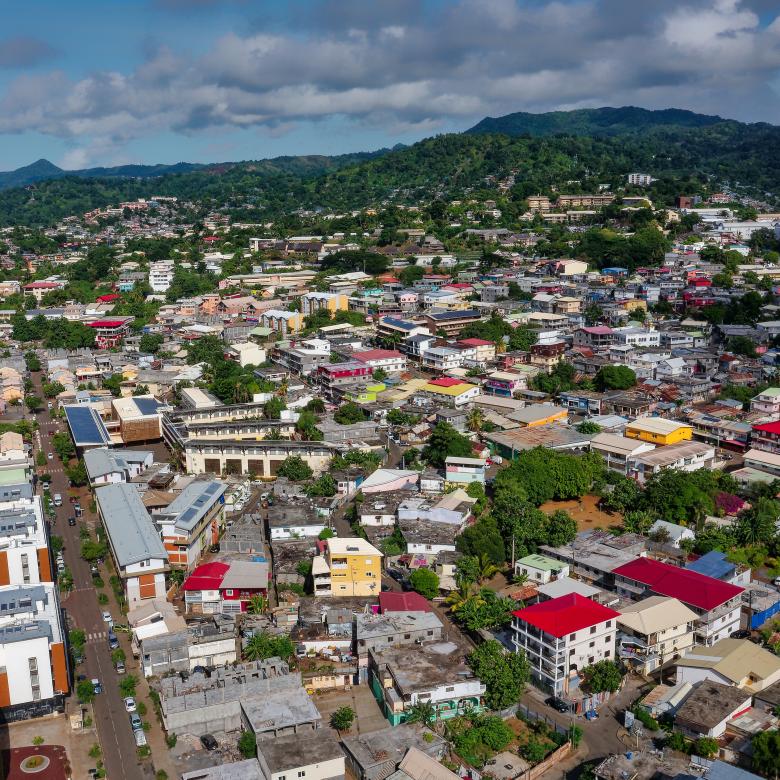
Four aspects are critical: the persistent water crisis, deforestation linked to agricultural needs, precarious housing, and everyday violence. These challenges are amplified by psychological dimensions and by an institutionalisation of violence. The question of habitability therefore remains crucial, from the standpoint both of the degradation of natural resources and of sociocultural upheaval.
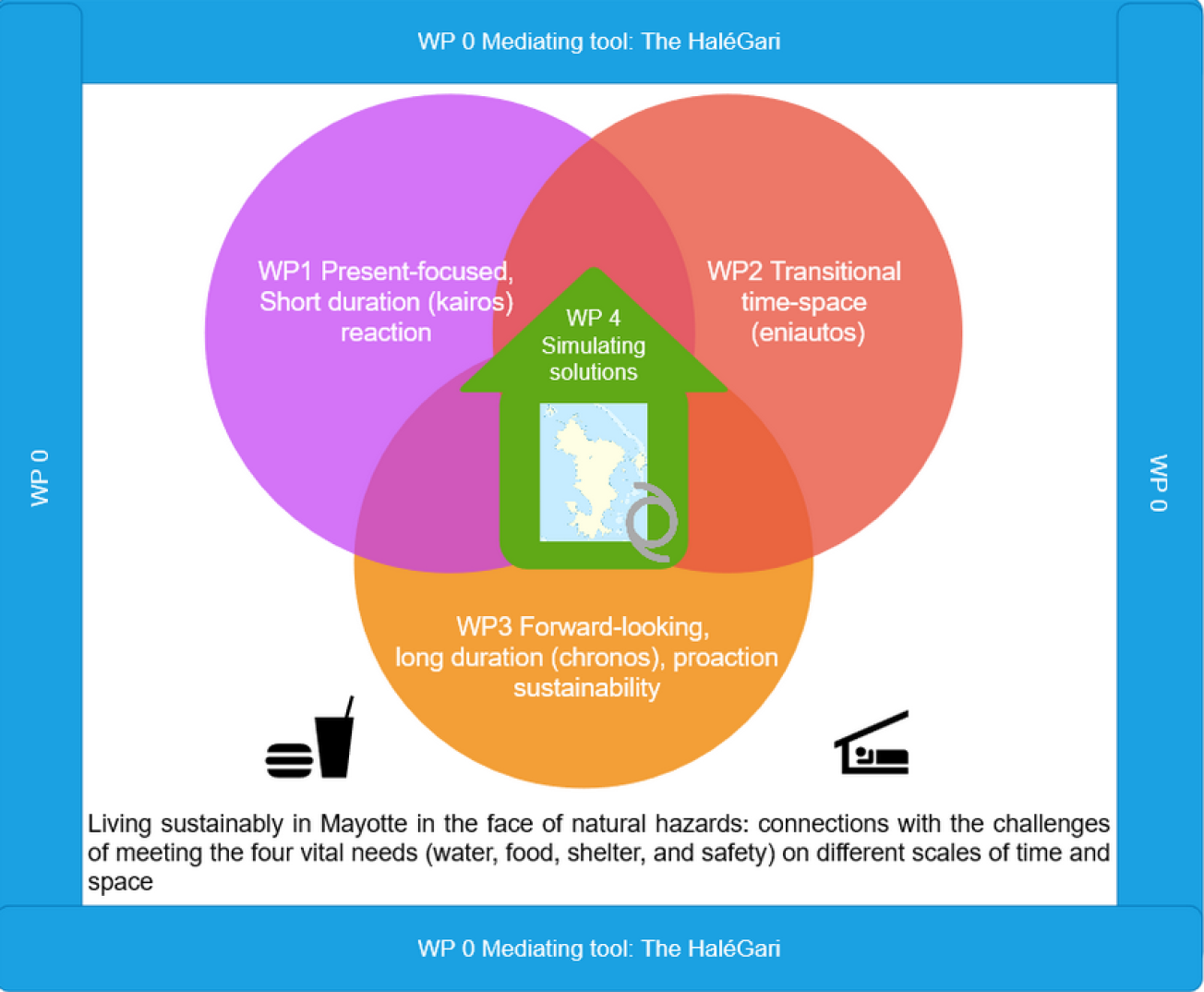
Against this backdrop, the aim of this multidisciplinary and transdisciplinary research project is to better understand how life in Mayotte can be (re)built, taking account of its complex and closely interlinked dimensions: biophysical, architectural, and human. Three distinct themes will be addressed:
- risk and habitability in a hazard-exposed territory, approached through the relationship between the ground, the various building cultures, and the territory's natural resources (namely water, the lagoon, the forest, and agriculture);
- risks and habitability in relation to cultural practices (including aspects relating to psychology, sociology, education, human geography, and linguistics);
- future habitability from a post-Chido perspective. Understanding the relationships between (1) and (2) within the reconstruction process currently under way, using a "Build Back Better" strategy, will serve to address this third question.
Expected outcomes
In the post-cyclone context of Mayotte, the opportunity to conduct interviews one to two years after the cyclone is both rare and valuable. Over time, memories fade, narratives are reconstructed, and individual recollections become intertwined with collective memory, which can compromise the accuracy of testimonies. This time lag will make it possible to capture more precisely how inhabitants experienced the event: their immediate reactions, their fears, the coping strategies they put in place, the forms of solidarity that emerged, and the concrete difficulties they have faced in accessing water, food, or healthcare since the cyclone. This information is essential for understanding resilience at the local level and for effectively informing reconstruction policies in Mayotte.
Moreover, by giving a voice to the inhabitants affected by the cyclone, these interviews acknowledge the value of their experience, their local knowledge, and their deep connection to the realities of a challenging environment. These qualitative data, combined with environmental, economic, and spatial data on the damage caused by the cyclone, will support a forward-looking approach to developing realistic scenarios adapted to the local context.
These scenarios will serve as a basis for dialogue among the various stakeholders — elected officials, technical experts, NGOs, inhabitants, and young people — in order to reflect collectively on desirable futures and those to be avoided. This co-construction will foster better coordination between decision-making levels and reconstruction efforts that are more inclusive and firmly grounded in local realities.
The scientific findings will be communicated locally through partnerships with associations, public lectures, and local media. Accessible formats will be prioritised: illustrated summaries and multilingual materials (French, Shimaore, Kibushi). In addition, public meetings and workshops will be organised in collaboration with municipal authorities and associations, creating spaces for dialogue in which inhabitants can ask questions, share their perspectives, and discuss how the findings can inform community initiatives and decision-making processes.
Project organization
Project leader
Olivier Cerdan (BRGM), Director of the BRGM Risks programme
Olivier Cerdan is Director of the Risks programme at the BRGM. After defending his doctoral thesis on soil-erosion modelling at INRA, he was awarded a Marie Curie postdoctoral fellowship at the Laboratory of Experimental Geomorphology of KU Leuven (Belgium), where he worked on a pan-European assessment of soil erosion. His main research interests concern the impacts of global change on soils and water resources during the Anthropocene. Within the BRGM, he has coordinated numerous multidisciplinary projects addressing questions of soil security, water resources, and disaster-risk reduction. Alongside his scientific coordination activities, he has served on evaluation committees at national (ANR VMCS, ANR CEP) and European (FP7 SME, H2020 S2b, H2020 SFS) levels, has taught at Master's level, and has supervised Master's and doctoral students. He has also held the position of deputy editor-in-chief for the European Journal of Soil Science and the journal Hydrological Processes (h = 42, Google Scholar).
Publications: http://scholar.google.fr/citations?user=pDefeMIAAAAJ. In addition to his extensive experience in leading and managing scientific research activities, he is the originator of the LESELAM project, which has been monitoring soil and water resources on the island of Mayotte for more than ten years, and he served as interim director of the BRGM's regional office in Mayotte in 2024 — giving him an in-depth knowledge of the local context, an essential prerequisite for the effective implementation of a scientific project on the island.
Partners