


Context and objectives
The ARDEMACS project is set against the backdrop of the increase in extreme climate risks in France and the need to strengthen the capacity of territories to anticipate and adapt to rare but high-impact climate events. Current adaptation strategies rest largely on reference climate trajectories that do not cover the full range of possible futures, particularly the combined extreme events that may exceed existing adaptive capacities. In this context, the scientific and operational challenge is to develop tools that make it possible to assess risks and to test the robustness of adaptation strategies against plausible but unlikely events, under conditions of deep uncertainty.
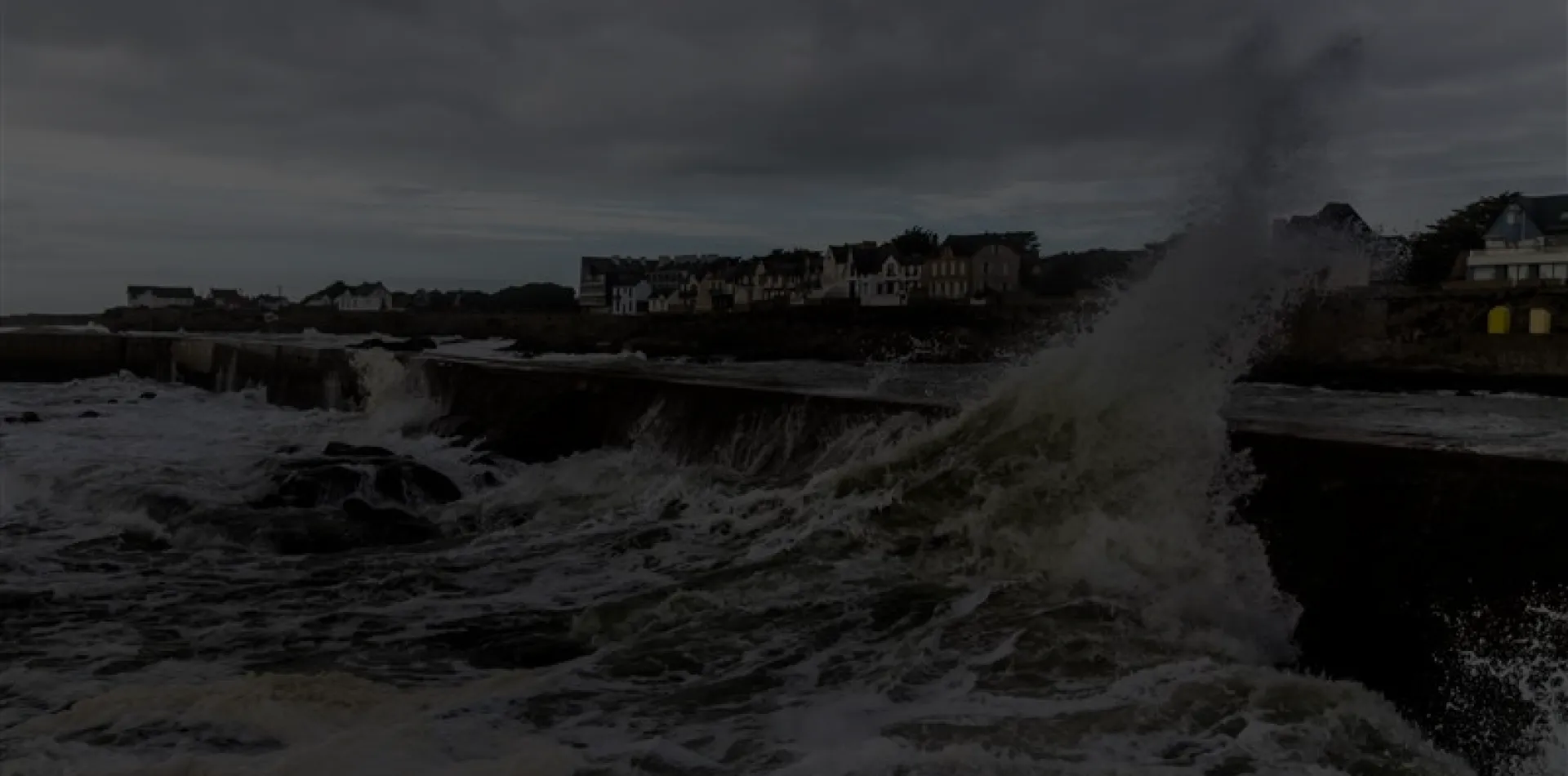
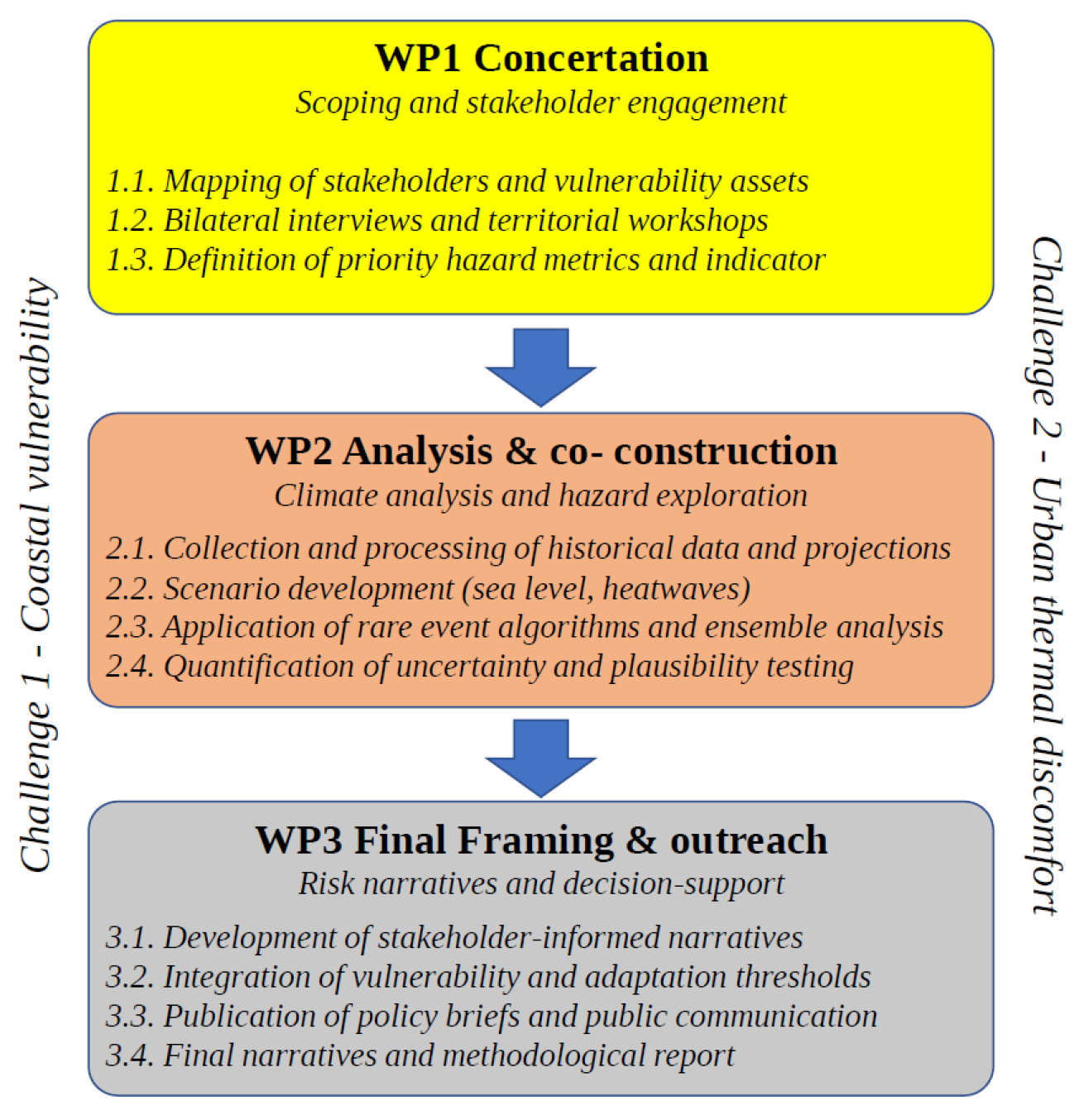
The aim of ARDEMACS is to develop an innovative approach based on the construction of physically plausible scenarios of extreme climate events ("climate storylines"), co-constructed with territorial stakeholders. These scenarios will make it possible to stress-test adaptation policies in order to identify critical vulnerabilities, adaptation thresholds, the limits of adaptation, and residual risks. The project focuses on two major challenges for the French territory: the risks of coastal flooding and extreme heatwaves in urban environments.
The project's ambition is to provide a reproducible methodological framework for robust decision-making in the face of extreme climate risks, transferable to other territories and to other types of risk. It thus seeks to strengthen the science–policy interface by producing tools that can be directly used by local authorities, State services, infrastructure managers, and economic actors.
Expected outcomes
ARDEMACS will produce scientific, methodological, and operational results that contribute directly to improving the management of extreme climate risks and adaptation policies. On the scientific level, the project will improve the characterisation of compound extreme climate events and of rare but plausible events, notably coastal flooding combining sea-level rise, storms, and extreme precipitation, as well as compound heatwaves associating drought, atmospheric heat, and marine heat.
On the methodological level, the project will develop an innovative approach to constructing extreme-climate scenarios usable for decision-making under deep uncertainty. These scenarios will make it possible to stress-test existing adaptation strategies in order to identify critical thresholds, the limits of adaptation, and residual risks. The project will produce a reproducible methodological framework for robust decision-making in the face of climate risks.
On the operational level, the project will produce territorialised scenarios, risk indicators, technical reports, scientific publications, policy briefs, and communication materials intended for public and private decision-makers. These results will make it possible to improve territorial planning, the management of critical infrastructure, and climate-change adaptation policies. The project will thus contribute directly to strengthening the resilience of territories in the face of extreme climate events.
Project organization
Project leader
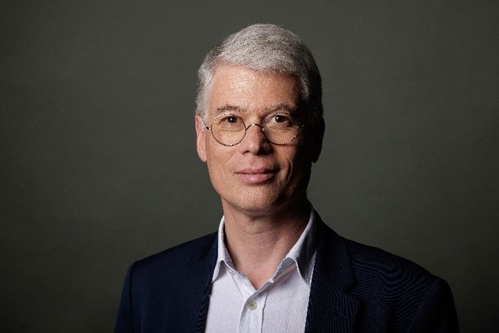
Philippe Drobinski (CNRS), Senior Research Scientist at the CNRS in the Laboratoire de Météorologie Dynamique (LMD-IPSL) and professor at the École polytechnique
Philippe Drobinski
Philippe Drobinski
Philippe Drobinski is a Senior Research Scientist (directeur de recherche) at the CNRS in the Laboratoire de Météorologie Dynamique (LMD-IPSL) and a professor at the École polytechnique. His research addresses climate variability and trends in the Euro-Mediterranean region, with a particular focus on water and energy resources. Between 2016 and 2024, he directed the LMD-IPSL. In 2019, he founded the interdisciplinary Energy4Climate (E4C) centre, which he has directed ever since. This research centre aims to address the systemic complexity of the energy transition in connection with the climate challenge. He is the author of more than 200 book chapters and articles in international journals. Within the MedECC (the Mediterranean equivalent of the IPCC), he was lead author of the chapter on the energy transition in the first assessment report on climate and environmental change in the Mediterranean region, and coordinated the drafting of a special report on the water–energy–food–ecosystems nexus. Since 2025 he has coordinated the MedECC's second assessment report, and he is a lead author of the forthcoming IPCC report. At the École polytechnique, he teaches climate change and the energy transition.
Partners