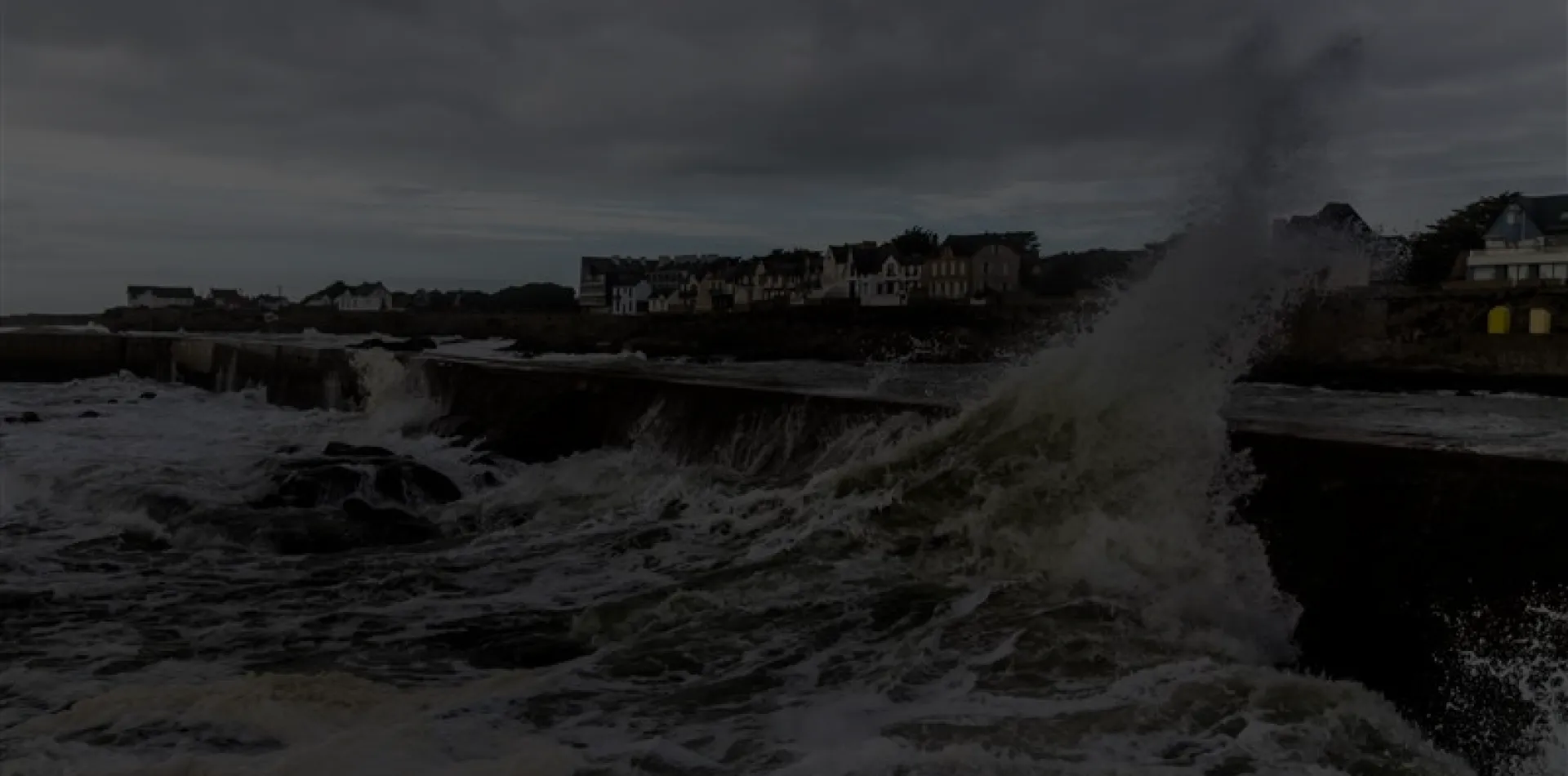



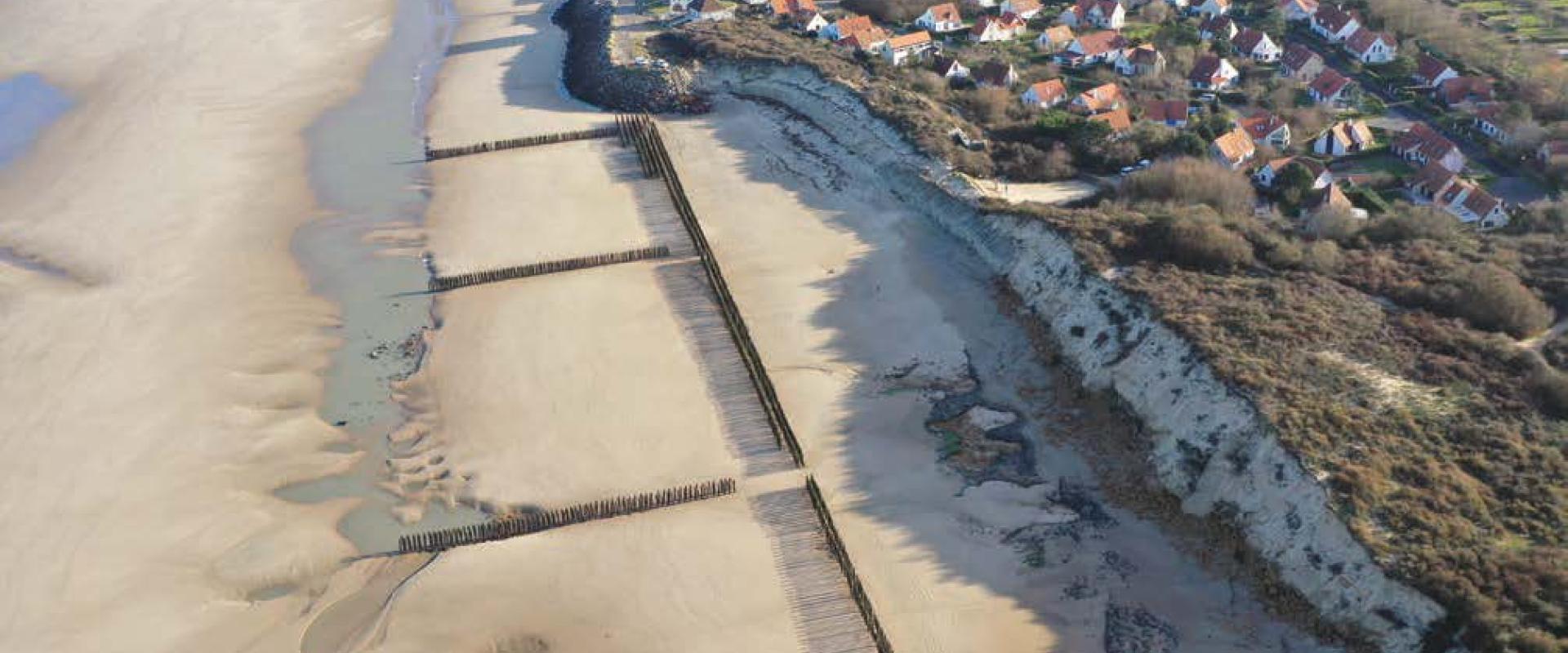
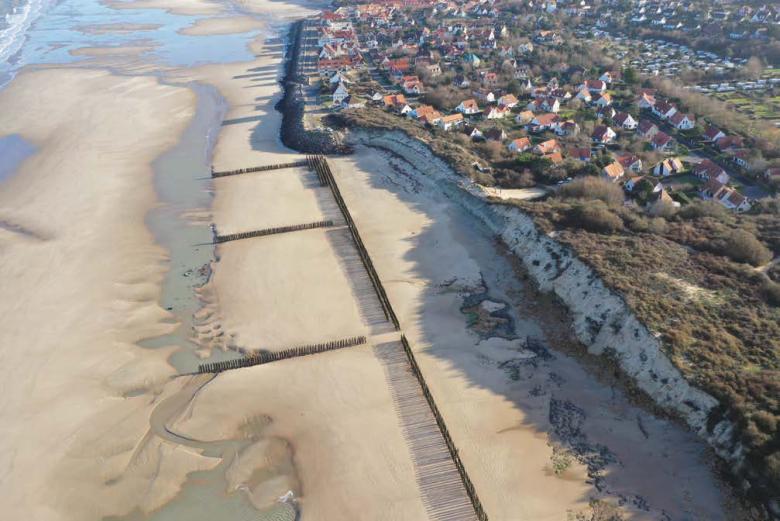
Town of Wissant (62), Residential development behind the Aval Dune
T. Segard
Context and objectives
The CLAIM project starts from the observation of the growing scale of the flooding and coastal-erosion risks affecting private residences and public facilities located on the coast. In the face of this rising exposure, the responses provided over the past decade appear both insufficient and economically unviable. In particular, there is a need to rethink the coverage mechanisms — insurance-based or funded through national solidarity — available to owners of threatened residences.
Several aspects of the project are innovative:
- the interdisciplinary approach to analysing the responses required to cover these risks;
- the highlighting of potential tensions between the European, national, and local levels;
- the exploration of risk perception and of possible insurance solutions among exposed residents.
On this basis, and within a temporal framing that accounts for changes in property prices linked to the evolution of coastal risks, innovative insurance coverage schemes will emerge, which may be purely private or, conversely, based on a public–private partnership. Their acceptability to residents will be tested.
The project's objectives are therefore multiple. They are:
- to devise and evaluate coverage schemes that could simultaneously smooth owners' economic losses, reduce dependence on national solidarity for compensation, and prevent insurers from withdrawing from the most threatened coastal zones;
- to better understand owners' perception of the coastal risks they face (taking cognitive biases into account in particular), as well as the guarantees provided — now and potentially in the future — by insurers and the State. The aim here is to better understand the respective shares that, according to the various actors, fall to national solidarity and to voluntary insurance.
Ultimately, by also surveying and analysing the ways in which other European and North American countries cover these risks, the project will consider which communication elements to prioritise in order to shift owners' perception of risk, as well as their perception of the protection that is — and could be — offered by insurers and the State.
The project will thus address the following research questions: In the face of coastal risks and their intensification, what insurance solution based on a public–private combination would guarantee both social acceptability and economic viability? Bearing in mind, of course, that account would need to be taken not only of the requirement of social justice [3] at the local and national levels, but also of national, European, and non-European regulatory frameworks. One may therefore ask: In what way can private and mutual insurers contribute to protecting their resident policyholders, as a complement to the public obligation to protect threatened populations? Which specific and innovative insurance products can meet this requirement? How do residential strategies and aspirations regarding the mutualisation of coastal risks evolve according to available information, property-market fluctuations, and the insurance products on offer?
Expected outcomes
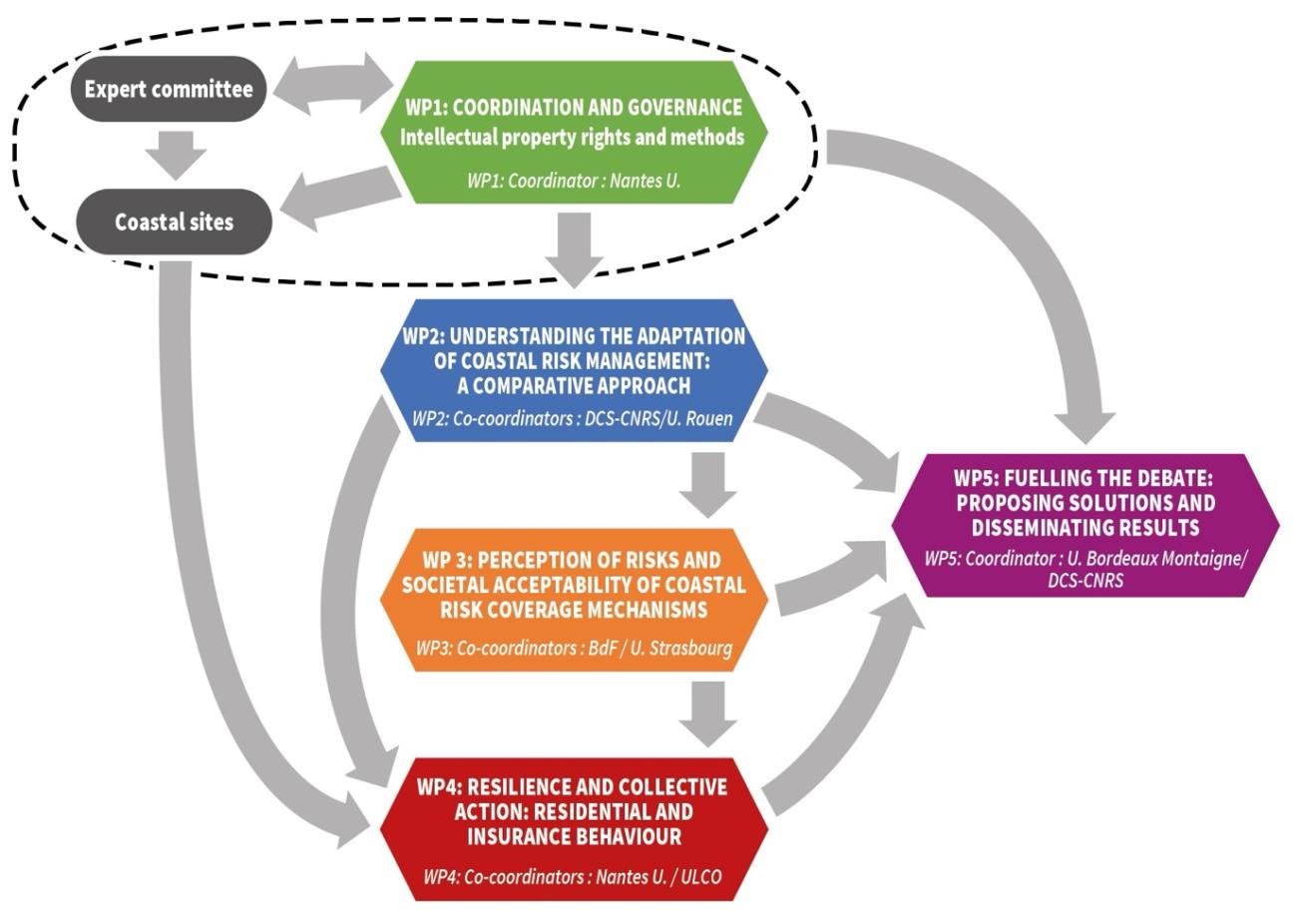
The main results are presented within the various work packages (WPs) that structure the project. For WP 2, which, through a comparative legal approach (Europe and North America), aims to list and analyse the different ways in which territories adapt to coastal risks, the expected results are as follows:
- to analyse the insurability of coastal risks;
- to evaluate the various insurance coverage schemes;
- to examine how the public and private sectors can be combined to move towards greater social justice.
Within WP 3, which addresses risk perception and societal acceptability:
- to consider the factors influencing the perception of coastal risks;
- to estimate how informational treatments affect expectations regarding property prices;
- to evaluate the social acceptability of coastal-risk management options.
For WP 4, the expected scientific results concern the ways in which residents apprehend coastal risks. To this end, we will study residents' perception biases regarding these risks and the decisions that follow from them, as well as how the scenarios we develop shape property decisions and the acceptability of insurance.
Finally, WP 5 will serve to feed the public debate around the insurability or non-insurability of coastal risks, by showing the actors involved (residents, elected officials, insurers, ministry, technical staff, and others) the various stages of our research and the results obtained. This constitutes a research–mediation process.
Project organization
Project leader
Caroline Rufin-Soler (Université de Nantes), coastal geographer
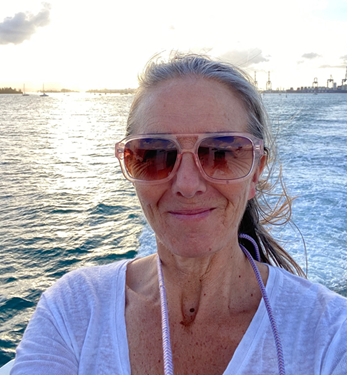
Caroline Rufin-Soler
Caroline Rufin-Soler
Caroline Rufin-Soler, coordinator of the CLAIM project, is a coastal geographer. Her research apprehends and assesses the adaptive capacities of coastal societies and of protected natural areas located on low-lying coasts subject to coastal hazards in a context of climate change. She works with societal stakeholders, through participatory approaches and serious games, to develop adaptation scenarios.
- Since September 2023: Associate Professor (maître de conférences, MCF) in geography at Nantes Université, LETG UMR 6554 CNRS
- 2012–2023: Associate Professor (MCF) in geography at the Université du Littoral Côte d'Opale, TVES ULR 4477
- 2008–2012: Research Engineer – Institute for Environmental Research
- 2005–2008: Postdoctoral researcher, BAR 1 & 2 project (Beaches At Risk), INTERREG IIIa, Université du Littoral Côte d'Opale, LOG UMR 8187 CNRS
- 2004: PhD in geography, Environmental changes of coral-atoll coastlines in the Indian and Pacific Oceans: the case of the Maldivian and Tuvaluan archipelagos, IUEM, Université de Bretagne Occidentale, LETG UMR 6554 CNRS
Partners