


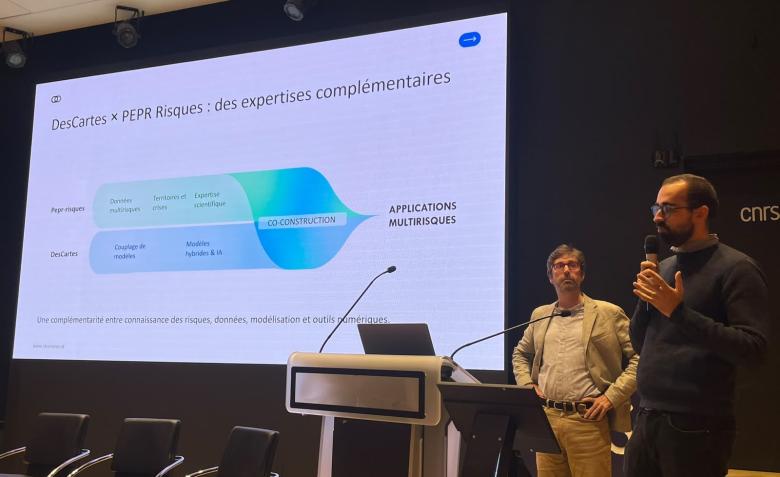
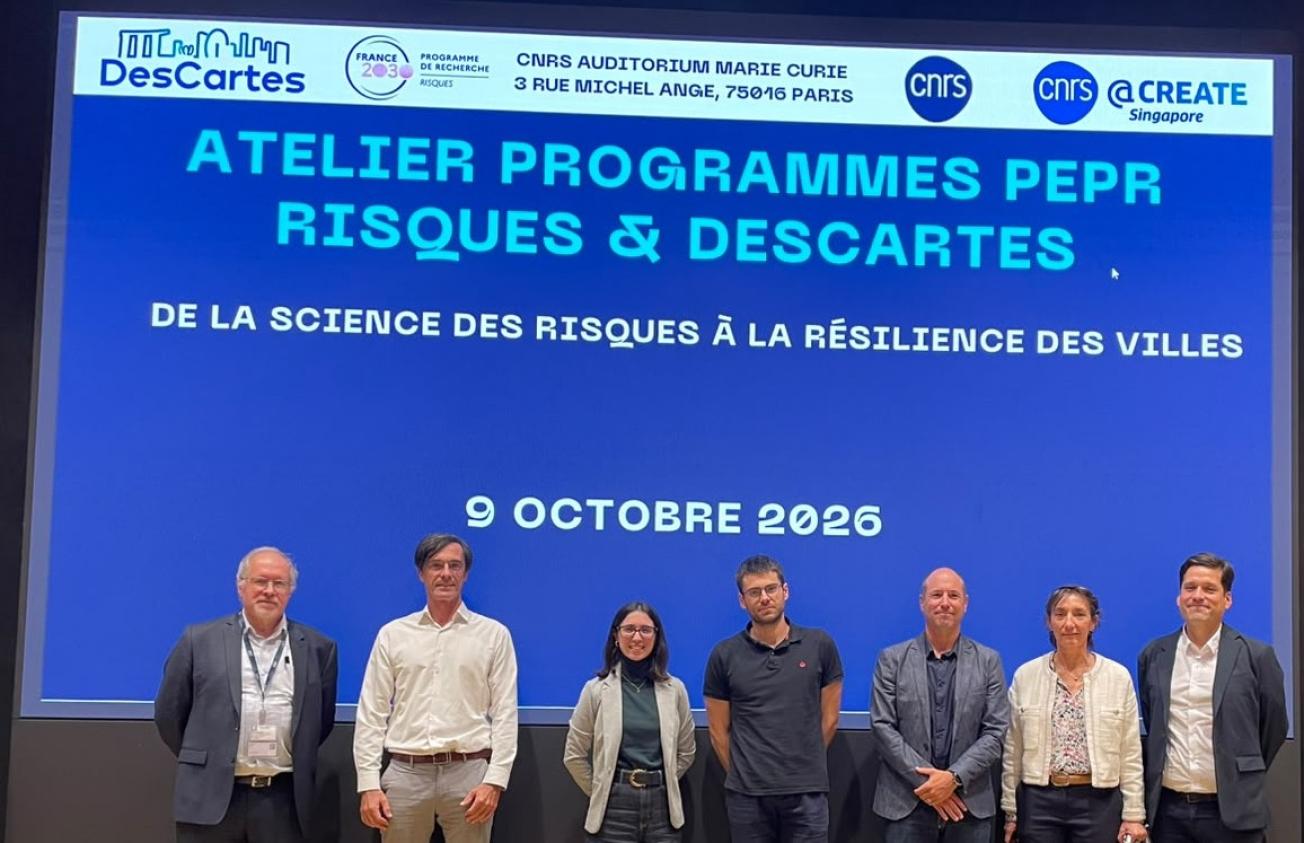
Participant·es à l'atelier des programmes Risques (IRiMa) et DesCartes.
Programmes Risques (IRiMa) et DesCartes
Atelier programmes Risques (IRiMa) et DesCartes
Programmes Risques (IRiMa) et DesCartes
A digital twin, what for?
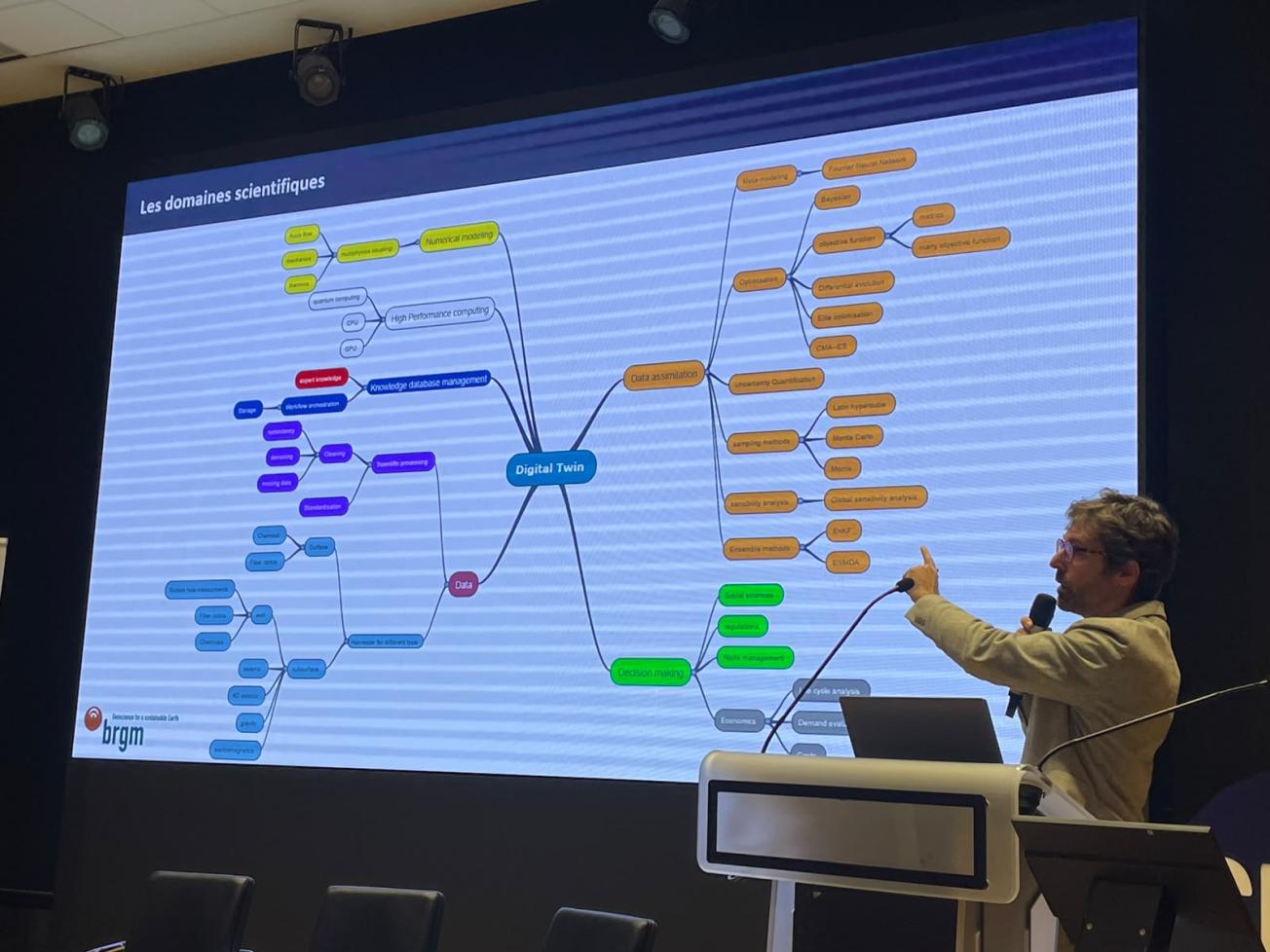
A city, an infrastructure network or a watercourse: a digital twin is a virtual replica, continuously fed by data, on which one can simulate what could happen. Applied to risks, it makes it possible to test scenarios (flood, fire, heatwave, evacuation) before they occur, and to help decision-makers anticipate and manage crises.
This technology is at the heart of the collaboration between two programs. The Risques program (IRiMa), led by BRGM, CNRS and Université Grenoble Alpes, is building an integrated science of risks. DesCartes, led by CNRS@CREATE, CNRS's subsidiary in Singapore, is developing hybrid digital twins that combine physics, engineering and artificial intelligence. Their ambition: real-time, frugal and explainable decision-support models for complex systems.
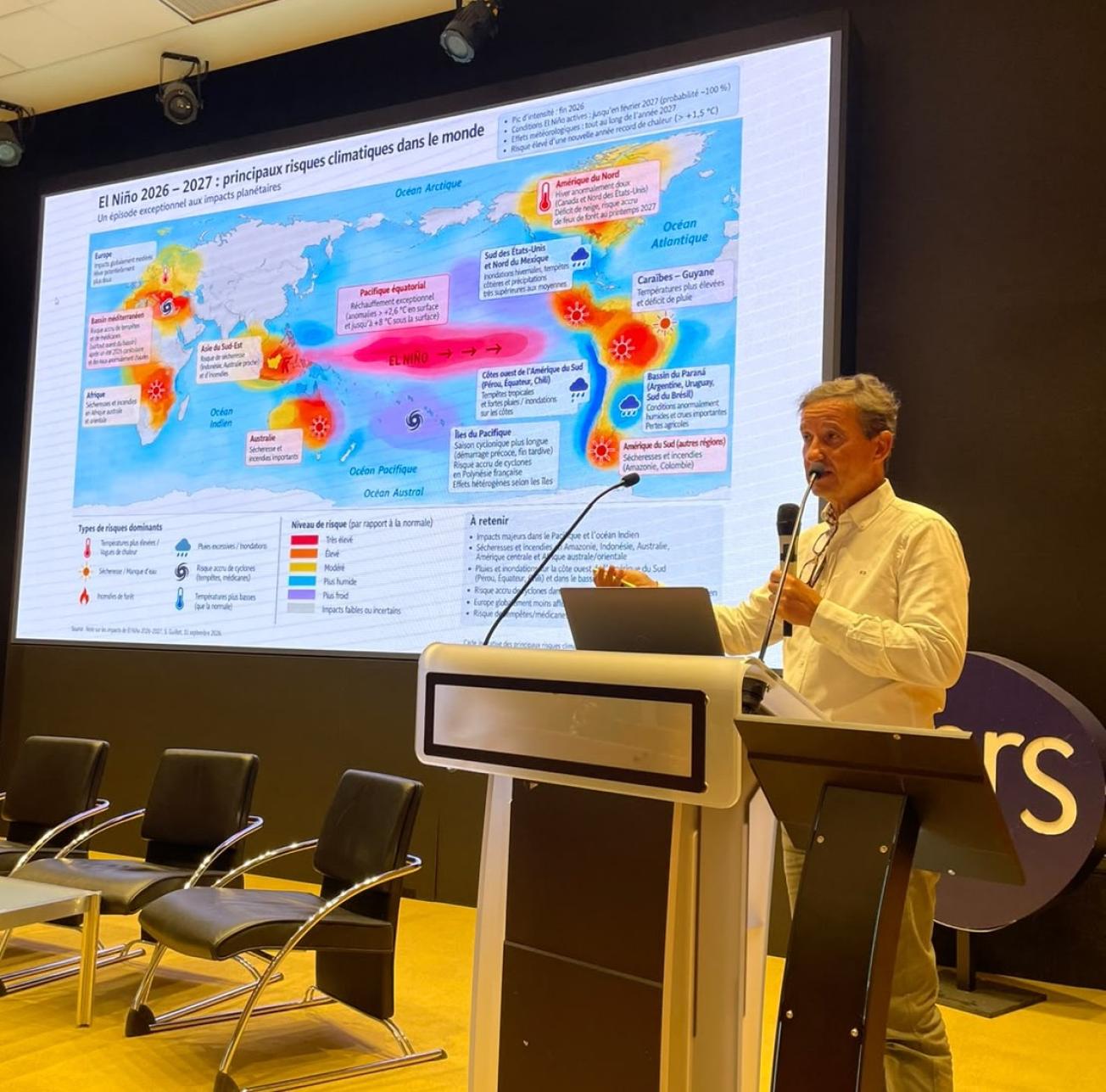
Opening: el niño 2026-27
The workshop began with an introduction by Stéphane Guillot, CNRS scientific delegate for the Environmental Transition and Risks. He presented the exceptional climate phenomenon El Niño 2026-27, which recalls the urgency of having tools capable of anticipating extreme events.
Three sessions to cover the scientific challenges
Researchers from both programs then gave joint presentations on the challenges of implementing digital twins:
- Technologies, for designing and operating a digital twin. The session covered fixed and mobile sensors, data and communication, hybrid models and their reduction, generative AI and large language models, as well as inverse problems (tracing back from observations to causes).
- Applications for cities, critical infrastructure, and territories. On the agenda: risks and resilience, digital platforms, population behavior, and mobility.
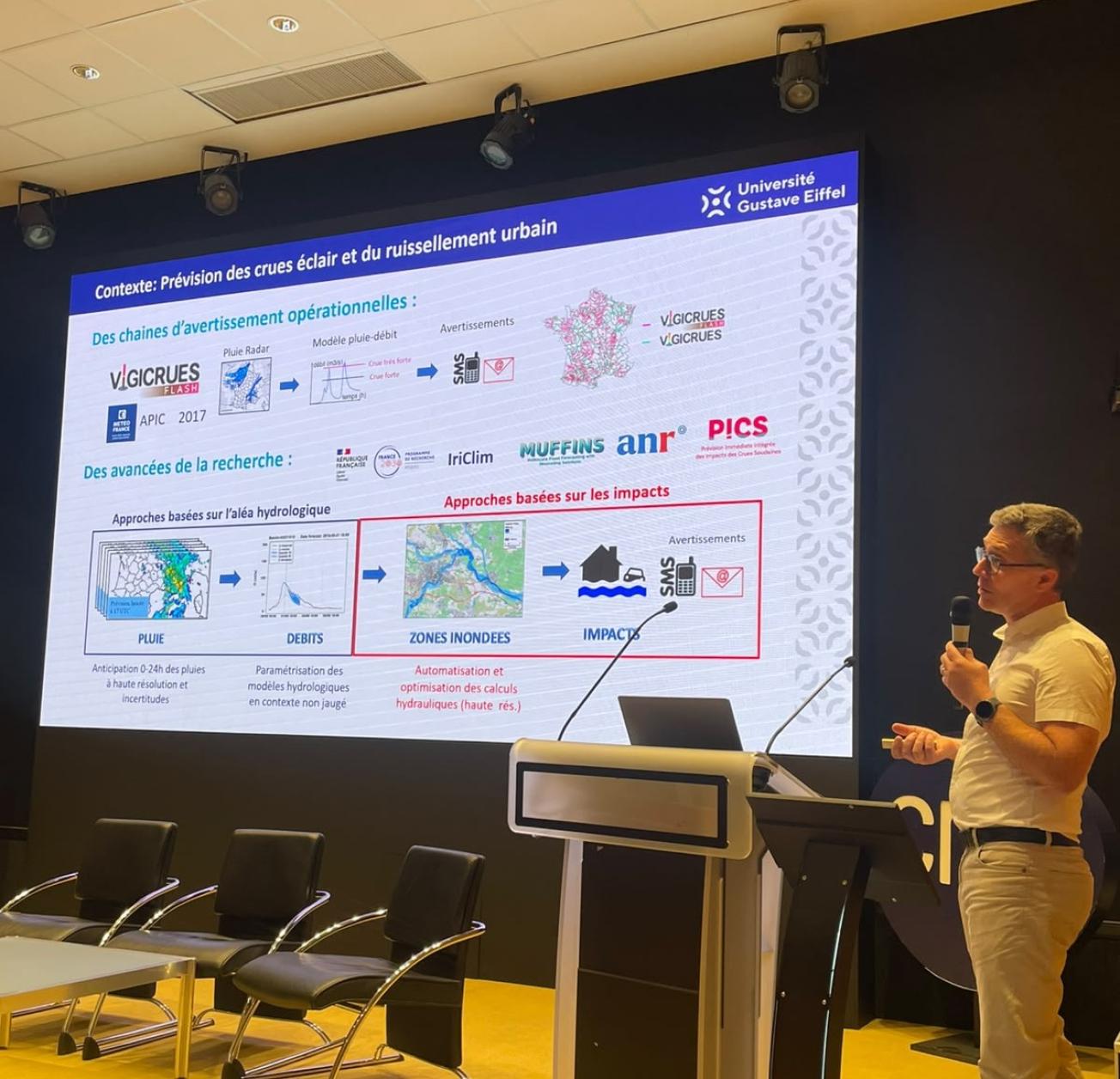
- Applications for quantifying risks and managing crises. The presentations covered urban climate, fire, particle dispersion, and underground spaces, as well as flooding.
The value of this dual entry is to link what we know how to model to what a territory needs in order to decide.
Round table: opportunities and obstacles
The day ended with the question that conditions everything else: what makes it possible, or prevents, moving from a research prototype to a tool used in the field? Three points of view were compared:
- Vincent Boudières, Head of the Risk Mission at Grenoble Alpes Métropole;
- Bénédicte Cadalen, Head of the Crisis Management Department at the General Secretariat of the City of Paris;
- Alvaro Artigas, associate researcher at Sciences Po.
DesCartes is an international research program led by CNRS@CREATE, the CNRS subsidiary in Singapore. It develops hybrid digital twins combining physics, engineering and artificial intelligence, to improve decision-support models in complex systems.
Atelier des programmes Risques (IRiMa) et DesCartes
Programmes Risques (IRiMa) et DesCartes
Atelier des programmes Risques (IRiMa) et DesCartes
Programmes Risques (IRiMa) et DesCartes
Atelier des programmes Risques (IRiMa) et DesCartes
Programmes Risques (IRiMa) et DesCartes
Atelier des programmes Risques (IRiMa) et DesCartes
Programmes Risques (IRiMa) et DesCartes
Atelier des programmes Risques (IRiMa) et DesCartes
Programmes Risques (IRiMa) et DesCartes